



Rackmaster Wildlife Dual Season Mix
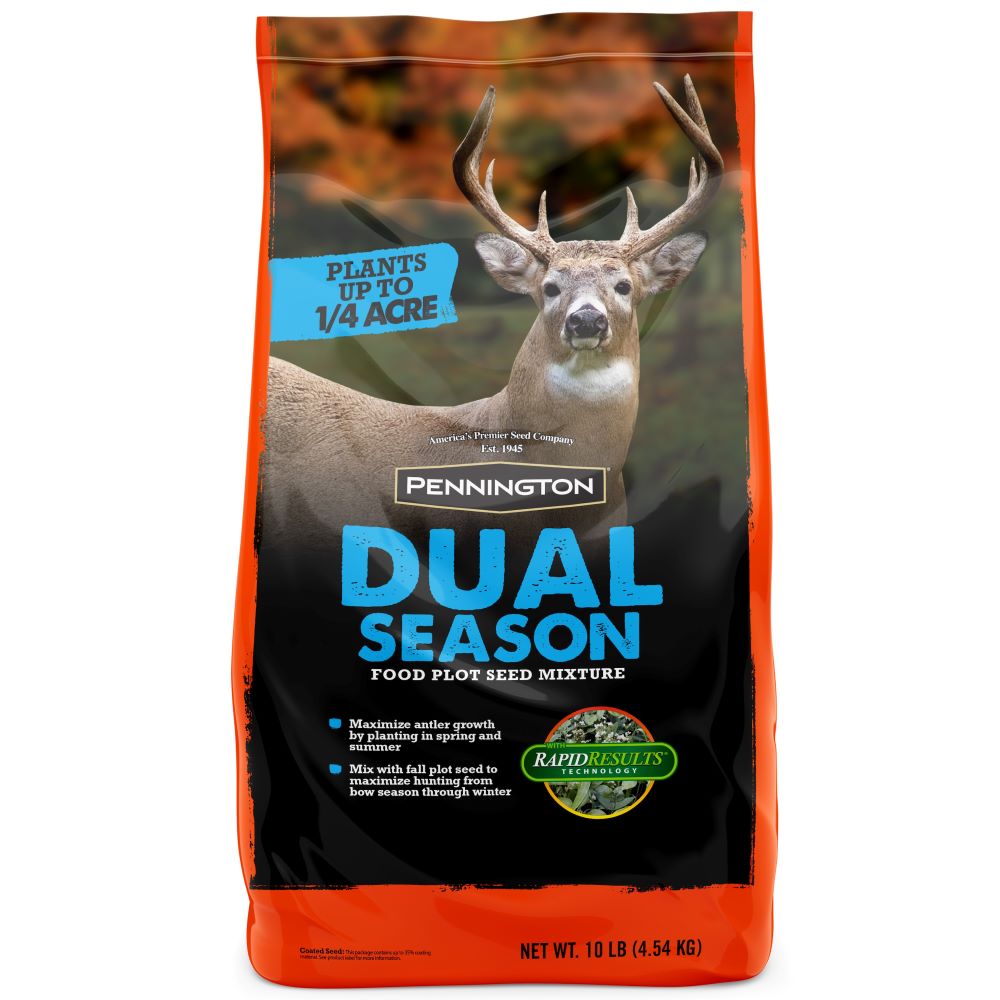
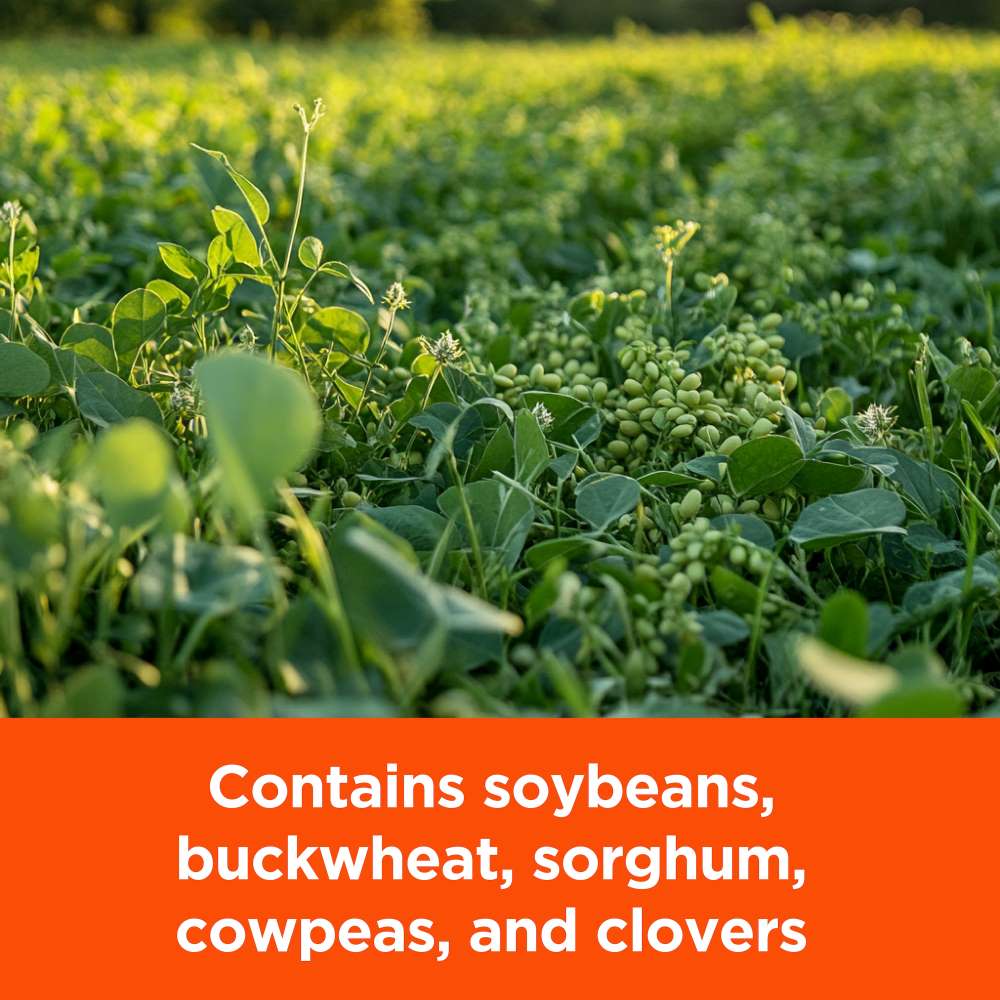
Pennington Rackmaster Dual Season is a premium deer food plot seed mix designed to provide fast-growing, protein-rich forage from spring through early fall. This mix combines warm and cool season components, making it ideal for spring or fall planting and perfect for bow season preparation. The Dual Season mix establishes quickly, filling critical early-season nutritional gaps while your fall food plot seed develops. Treated with RapidResults, each seed is bio-stimulated to emerge faster, grow stronger, and develop deeper roots—ensuring plants can withstand heavy grazing and varying weather conditions. This formula delivers optimal nutrition for early antler development, body condition, and overall herd health. Whether you're planting in spring or enhancing your fall strategy, Dual Season helps maintain active deer food plots and improves hunting success. One 10 lb. bag covers up to ¼ acre, making it a great choice for food plot land managers seeking consistent attraction and durable, high-performance forage.
Sizes:
- Pennington Rackmaster Dual Season
- Spring/summer mix extends food plots for deer into early fall
- RapidResults coating boosts germination and root development
- Ideal for spring or fall planting in any food plot
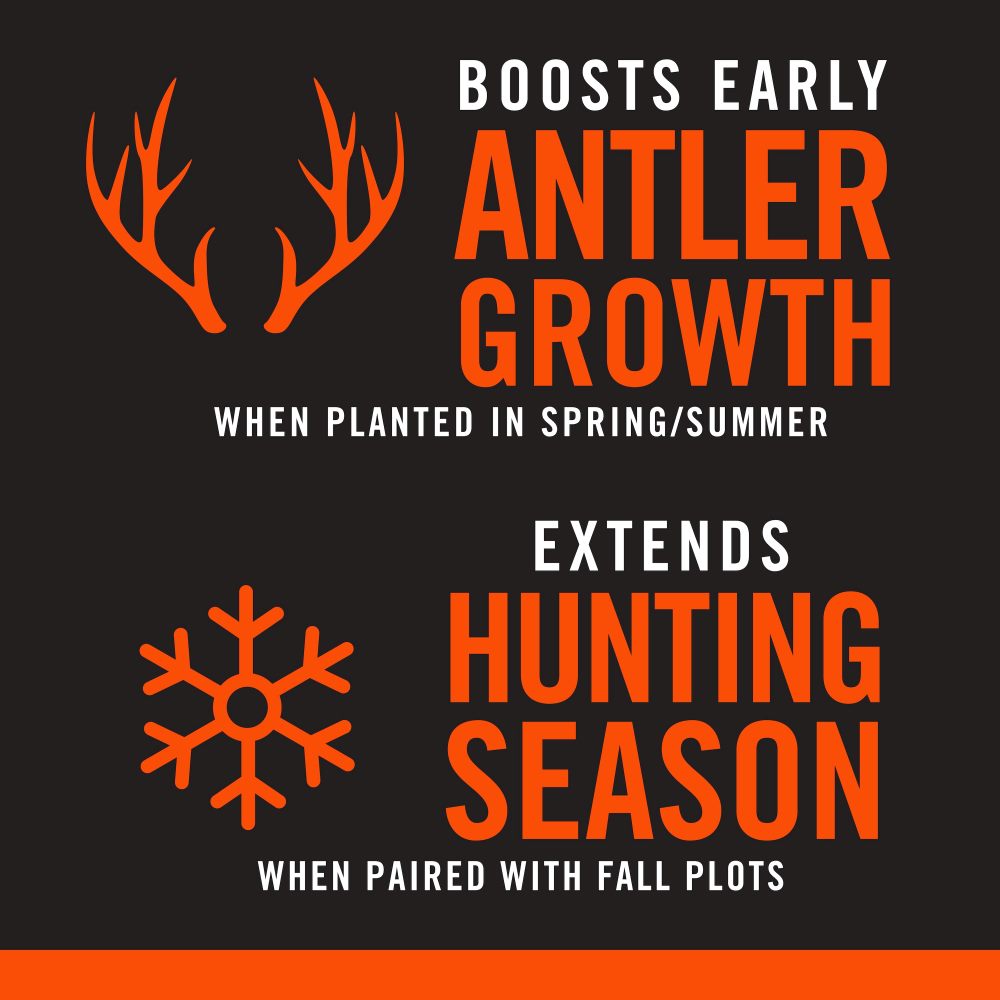
- Provides protein-rich forage for antler growth and body condition
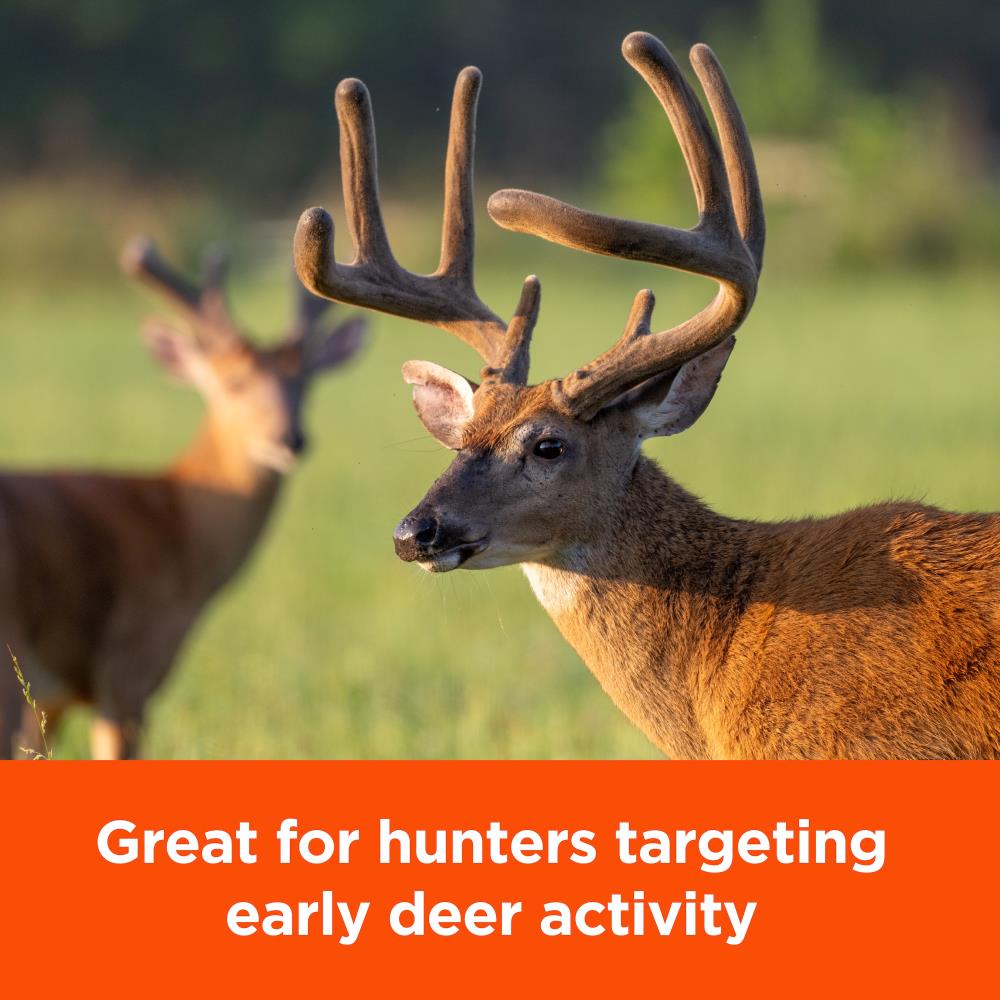
- Great for bow season prep and early-season deer attraction
- One 10 lb. bag covers up to ¼ acre of ground
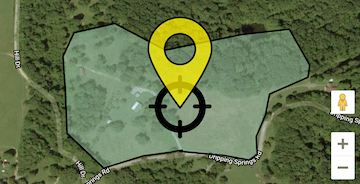
Food Plot Map Tool
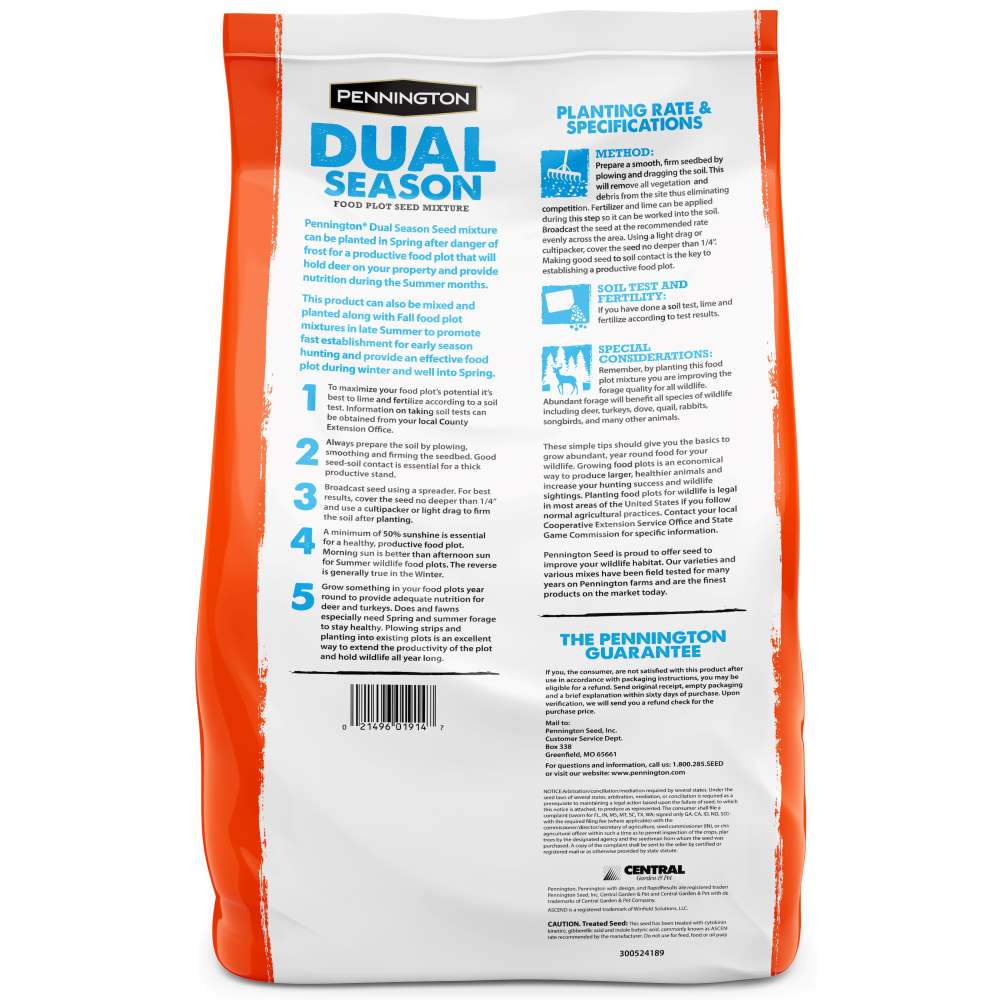
Method: Choose a site that receives a minimum of 8 hours of full sun. Prepare a clean, smooth and firm seedbed by plowing and dragging the soil. Fertilizer and lime can be applied during this step to incorporate it into the soil. Plant with a drill or broadcast seed evenly across the soil surface and incorporate it using a culti-packer or by shallow disking. Care should be taken to ensure seed are planted at the proper depth. If seed are disked in, the use of a culti-packer or roller after seeding ensures good seed/soil contact which improves stand emergence.
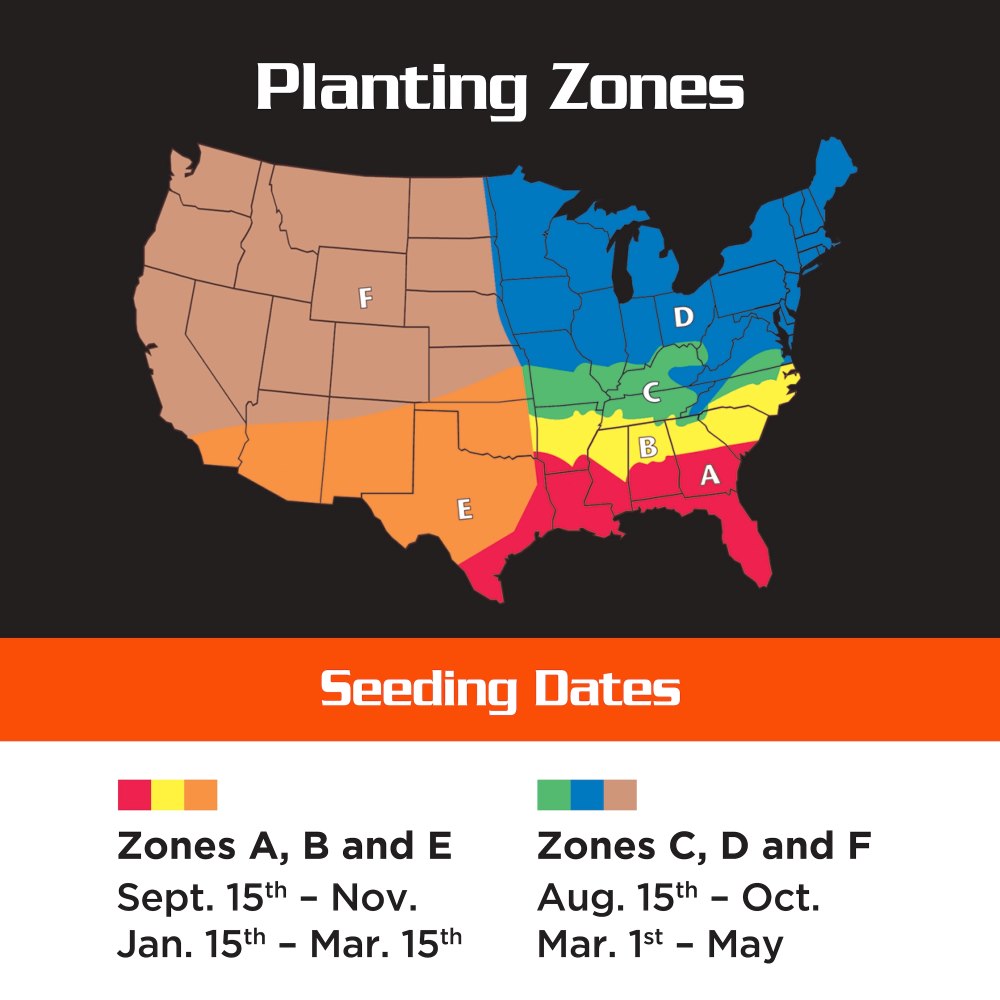
Seeding Date: Apr. - June for spring; Aug - Sept. for early fall plots
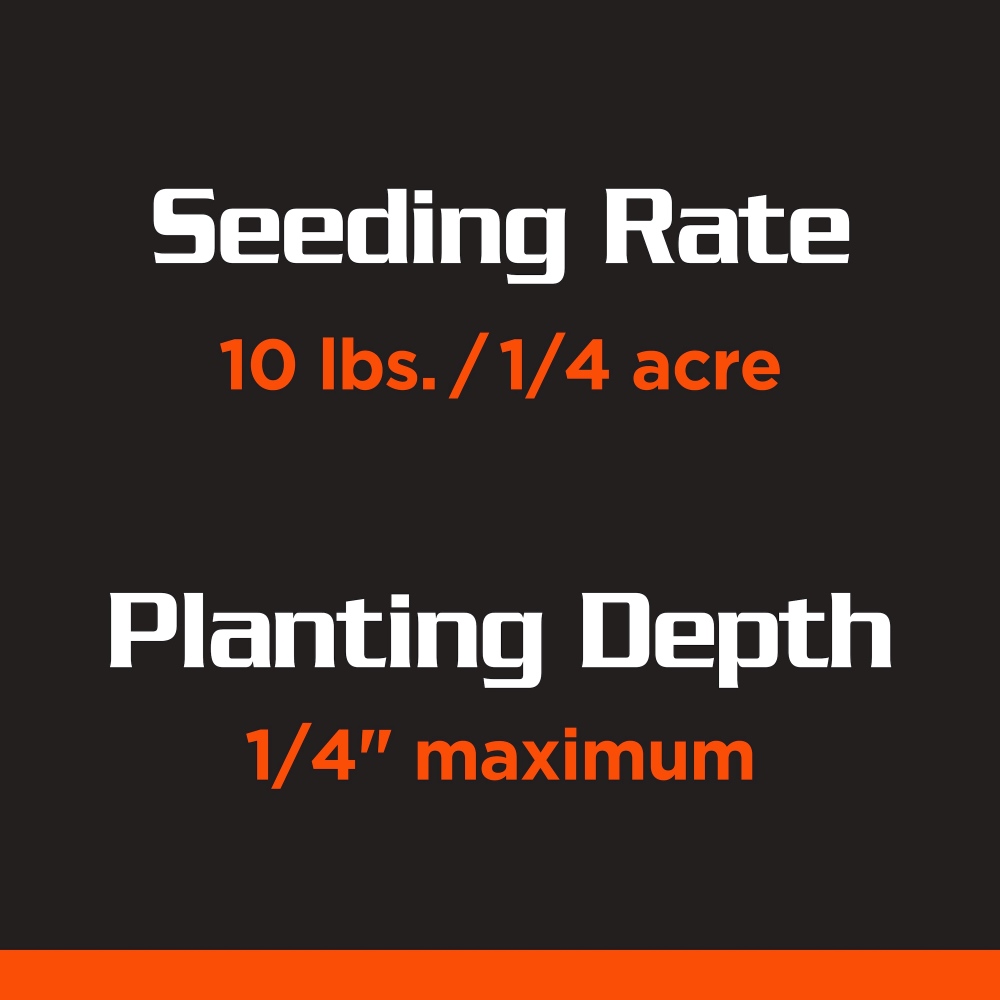
Seeding Rate: 10 lbs. ¼ acre
Depth: 1/2" - 1" (stand failures will result from seed planted too shallow or too deep).
Fertilizer: Soil testing is highly recommended. Liming to a pH of 6.0-6.5 and providing adequate levels of potassium and phosphorus are necessary to ensure a productive food plot. See your local county extension office for soil sampling assistance. In the absence of a soil test, apply 400 lbs. /acre 10-10-10 (10 lbs. /1000 sq. ft.) or equivalent fertilizer and 1 ton/acre ag lime (50 lbs. /1000 sq. ft.).
Management:
Monitor food plots weekly throughout the summer months for damaging insect presence (worms, aphids, etc.). If insects are found and feeding damage is significant, an appropriate insecticide should be applied. The local university extension office can provide information on treatment thresholds and recommended insecticides.
Special Note: When using pesticides, carefully read and follow all label guidelines for mixing, applying and personal safety. If applying herbicides, extreme care should be taken to avoid overlapping the spray and to also prevent herbicide drift or accidental application to any desirable plants, trees and shrubs adjacent to the target area being sprayed.
Tips for Successful Food Plots:
1. Every successful food plot begins with a soil test. Most woodland soils have low pH and low fertility. A soil test will tell you how much fertilizer and lime is needed. Information on taking a soil test can be obtained from your local county extension office.
2. Spend the extra time necessary to properly prepare the soil by plowing, smoothing and firming the ground. Planting on a weed free, smooth and firm seedbed that allows good seed-soil contact is essential for a thick, productive forage stand.
3. Plant seed at the proper seeding depth. Planting too shallow or too deep can result in stand failure. Seed mixes containing small seeded legumes and forbs should not be seeded deeper than 1/4 inch. Use a cultipacker, log or a light drag to firm the soil after planting.
4. When selecting a wildlife food plot site, choose an area that is long and narrow with curves or bends in it. This provides a sense of comfort and safety for wildlife. When developing food plots, a good rule of thumb is to plant 2.5 to 7 acres of food plots for every 100 acres of habitat.
5. Avoid droughty sites such as eroded hillsides or shallow, rocky soils. Southwest facing slopes are hotter in the summer and tend to dry out faster than bottom land.
6. A minimum of 50% full sunshine is essential for a healthy and productive food plot. Morning sun is better than afternoon sun for summer game food plots. The reverse is generally true in the winter.
