.png?h=146&iar=0&w=301&hash=690753E2FA9563314B9D941A755BB22F)

All About Woodpeckers and How to Attract Them

You'll likely hear the rhythmic food-seeking drilling or the mating call drumming of a woodpecker before you see one. But, when you do — they're beautiful! Various species flaunt colorful patches of red feathers; sleek, elongated beaks; eye-catching black-and-white speckles and elegant barred feather patterns.
Get ready to spot a woodpecker through your binoculars on a nature walk, or attract them to your backyard feeder.
- How to Identify a Woodpecker
- Where Do Woodpeckers Live?
- What Do Woodpeckers Eat?
- Increase Your Woodpecker Watching
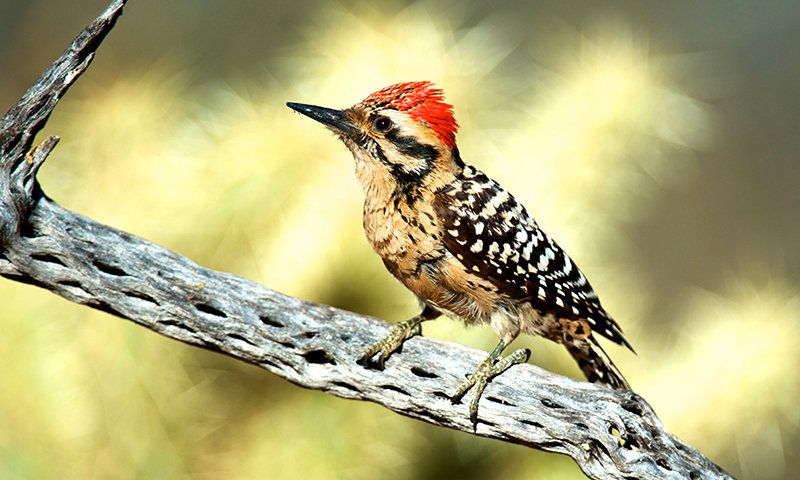
Woodpeckers are easily identified by their familiar drilling sounds.
How to Identify a Woodpecker
With nearly two dozen types of woodpeckers gracing trees of North America, you'll likely spot a few species in your area.
They all sport unique feet designed for tree clinging and climbing. While birdwatching, you'll notice woodpeckers have two toes facing forward and two toes facing backward — all equipped with sharp claws — to make scaling trees simple as they hunt for food or search for shelter.
Woodpeckers also have strong, straight beaks and a long tongue that wraps upward into the head and around the brain, which serves as a padded shock absorber when pecking at their signature fast speeds. A woodpecker's tongue can be up to one-third of their total body length. If human tongues were the same proportions, they'd be about two feet long!
3 Common Woodpeckers
As your birding hobby expands, look close at the details of the woodpeckers you see. You might spot one of these popular varieties:
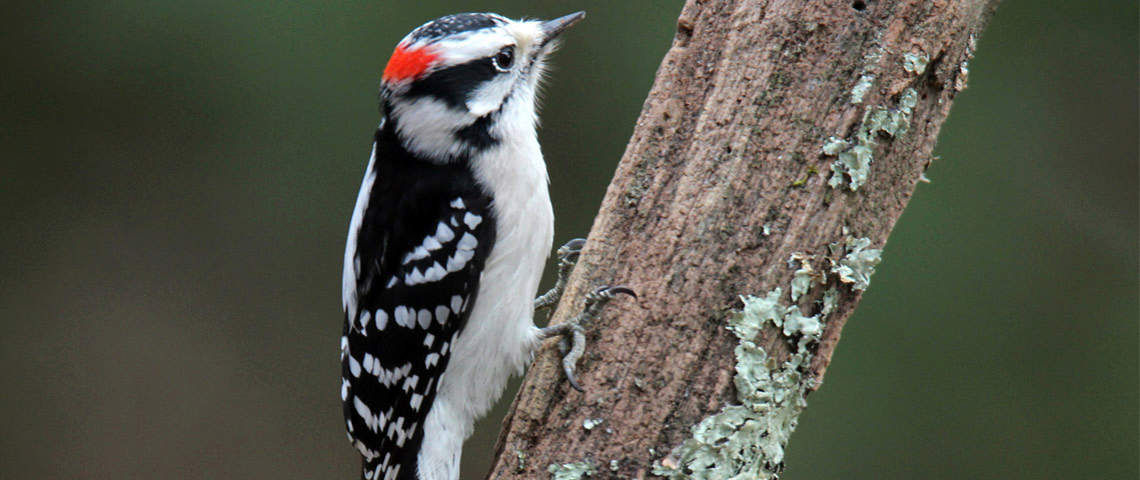
- Downy Woodpecker: This petite 6-inch-long woodpecker inhabits deciduous forests and conifer tree-heavy areas across the majority of the United States, excluding the Southwest. Look for black and white stripes on the face and a little cap of red feathers on the crown. Notice the black bars on the long white tail feathers of Downy Woodpeckers.
- Acorn Woodpecker: This larger species, measuring approximately 9 inches in length, prefers forest areas in the West and Southwest. This woodpecker has a bold, black-and-white face mask topped with red head feathers. If you catch this bird in flight, take note of the small white patches on the black wings.
- Red-bellied Woodpecker: Bigger yet, this 10-inch-long woodpecker calls woodlands and wetlands of the Midwest and Southeast home. You can't miss this species thanks to its stunning lines of narrow black and white barring across the back and wings. Adult males also flaunt a bold red head of red feathers with white cheeks.
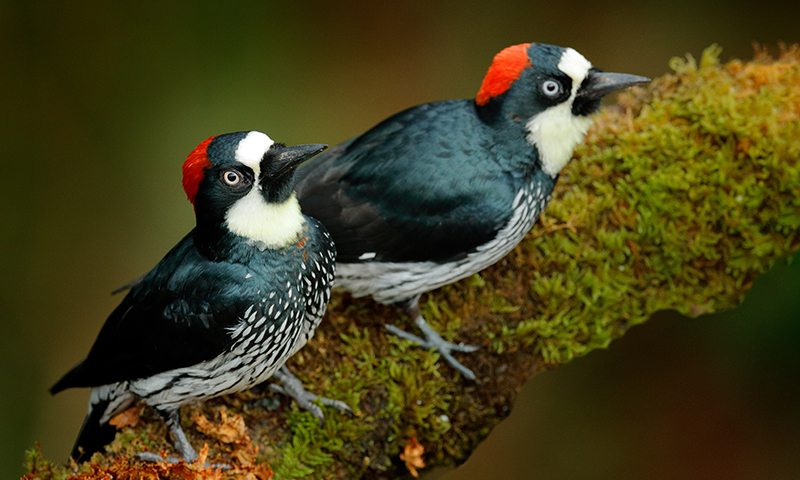
Not all woodpeckers migrate. Some will stay in the area year-round.
Where Do Woodpeckers Live
Woodpeckers find refuge in tree-abundant areas across the globe, with the exception of a few locations, including Antarctica, Australia, New Zealand and Madagascar.
Some woodpeckers live in one general area year-round. These non-migratory woodpeckers (including the Red-bellied Woodpecker, Hairy Woodpecker and Pileated Woodpecker) may shift a bit within their range to take advantage of seasonal food availability or breeding opportunities.
Other woodpeckers leave for the winter to find more suitable habitats and reliable food sources. For example, the Lewis's Woodpecker lives in the West and the Southwest most of the year. During the winter months, many migrate to the lower elevations of southern California, New Mexico and Arizona.
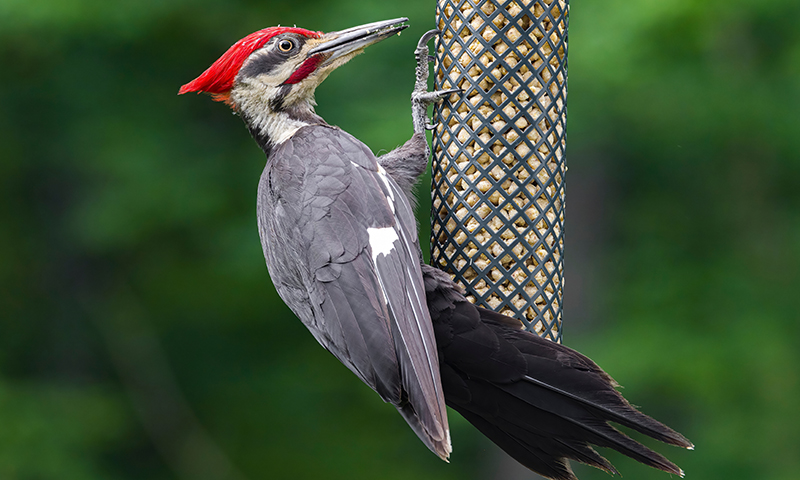
Woodpeckers dine on a mix of insects, berries and nuts.
What Do Woodpeckers Eat
Woodpeckers spend the daytime foraging for insects, beetles, larvae, spiders and other potential meals hiding in the bark and wood of dead trees. They use an acute sense of hearing, followed by their long beaks, to capture prey.
Look close for woodpeckers if you happen to have rotting trees with loose bark or hollow trunks on your property.
You might also find them plucking berries from bushes or gathering acorns and pecans. Woodpeckers also enjoy finding grasshoppers, caterpillars and small frogs to round out a meal.
Feeding Woodpeckers in Your Backyard
To get a better look at woodpeckers, invite them to your property. You can plant deciduous trees to explore, offer berry bushes for tasting and hang bird feeders to encourage year-round feeding. Try one of these food and feeder combinations to bring woodpeckers to your yard.
- Pennington Feeding Frenzy Woodpecker Nut & Fruit Double Nut Blend Wild Bird Food: This food features nuts, sunflower chips and cherries to entice woodpeckers. Fill a Pennington Cedar Hanging 2 in 1 Bird Bath/Feeder with this mix, and enjoy an unobstructed view of your favorite bird eating a snack.
- Pennington Select Birder's Blend Seed & Mealworm Mix: Woodpeckers enjoy the variety of foods in this blend of mealworms, black oil sunflower seeds, white proso millet and more. Add this mix to the Pennington Cedar Nature's Friend Bird Feeder to offer a steady supply of food for your feathered friends.
- Pennington Feeding Frenzy Wild Bird Food Cardinal & Songbird Suet Nugget Blend: During cooler weather when insect food options go dormant, high-energy peanut suet nuggets paired with raisins, black oil sunflower seeds and more will delight woodpeckers. Serve it up in a Pennington Recycled Ecozebo Bird Feeder that allows for many birds to perch and feed around the perimeter of the structure.
Ready to boost your birding supply? Browse additional bird feeders and houses, as well as seed blends from Pennington Wild Bird.
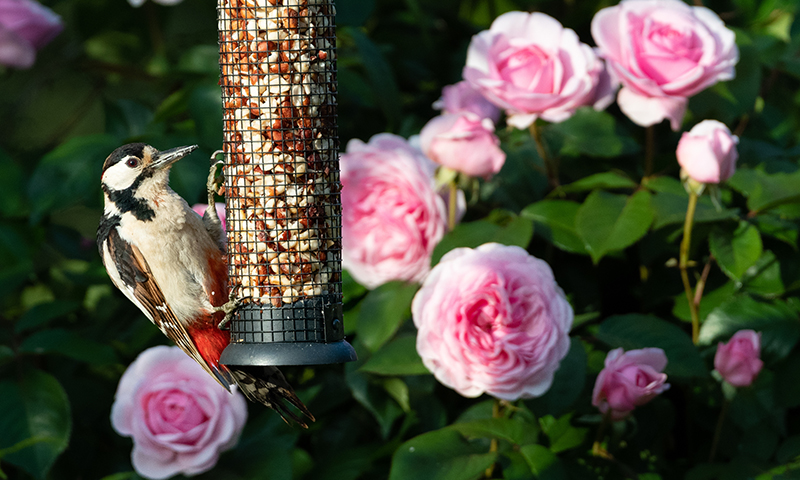
Increase Your Woodpecker Watching
With the right mix of patience, bird food and feeder, you can bring more woodpeckers into view. This species craves nuts, fruits and mealworms served up in a clean, well-stocked feeder that offers a continuous supply of nourishment.
Have questions about feeding outdoor birds or what feeders to use? Reach out and let us know. We have answers to help you learn and grow. Our specialty is helping dreams come true. Let us help you nurture your roots.
Always read product labels and follow instructions carefully.