.png?h=146&iar=0&w=301&hash=690753E2FA9563314B9D941A755BB22F)

How to Overseed Bermudagrass for Winter

Tired of staring at a brown lawn from November to April? There's a fix. Sow perennial ryegrass over your bermudagrass in early fall and you'll spend the winter on a soft, green yard instead of a crunchy tan one.
Bermudagrass (often spelled “Bermuda grass”) is a warm-season grass. It thrives on heat and shuts down when the air turns cold.1 That's why lawns across the South go dormant (tan or brown in color) by Thanksgiving. Overseeding solves that. It's a one-weekend project, and this guide walks you through the whole thing.
Table of Contents
- Why overseed at all?
- Timing the job right
- Choosing your seed
- Prepping the lawn
- Seeding day and the first two weeks
- Life after germination
- Common ways homeowners make mistakes
- Passing the lawn back to bermudagrass
Why overseed at all?
Picture two houses on the same block in January. One yard is brown and crunchy. The other is soft and green. Same weather. Same bermudagrass underneath. It turns out, the green one was overseeded in the fall.
Here's what you get out of it:
- A yard you can actually use. Holiday games, weekend cookouts, muddy dog paws — all better on green grass.
- Curb appeal through the cold months. Your home shows well for winter visitors and taking photos.
- Protection for your soil. Living roots keep the ground in place when winter storms roll in.
Your bermudagrass lawn isn't dead in winter. It's sleeping. Ryegrass (sometimes spelled “rye grass”) just holds the space for a few months and steps aside when spring returns.
Timing the job right
Nail the timing and the rest of the job gets easier. Miss it and you'll fight the lawn all winter.
The sweet spot is early fall. Early fall provides the best conditions for overseeding because bermudagrass begins to slow while cooler temperatures help perennial ryegrass establish quickly. To learn more about why fall consistently produces the best results, read our guide on why fall is the best time to plant grass seed.
Watch for these cues:
- Bermudagrass takes longer to bounce back between mowings
- Mornings feel crisp on the porch
- Highs stop climbing into the 90s
- Mosquitoes start to disappear
Overseeding windows vary by region and by year — here's a general look, but confirm exact timing with your local extension office:
| Region | Overseeding Window | Notes |
| Texas | Mid-October | Watch nighttime lows in the South |
| North Carolina | Late September - early October | Beat the first frost |
| Arizona | Early October | Cool mornings are the signal |
| North Florida | Mid-October to early November | Later than most of the South |
The clearest signal is soil consistently in the 50s to mid-60s.2 A soil thermometer costs a few dollars and takes the guesswork out. If you don't own one, most county extension offices post weekly readings online.
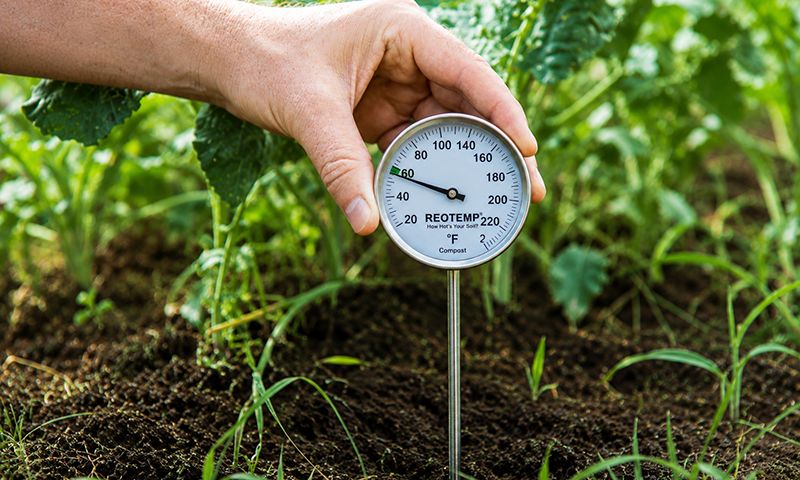
The best time to overseed bermudagrass is when soil temperatures consistently stay between 50°F and 65°F.
Choosing your seed
Perennial ryegrass is the go-to. It sprouts fast, holds a rich green color, and gets along with dormant bermudagrass better than most other cool-season options.
If you're looking for a premium perennial ryegrass, Pennington Fairway Supreme Perennial Ryegrass is designed to establish quickly, produce a fine-textured, dark green lawn, and stand up well to winter foot traffic.
Why it works so well:
- Dark green blades with a fine texture
- Handles kids, pets, and foot traffic
- Naturally fades once temperatures climb — no fight to remove it in spring
Plan on 5 to 10 pounds of perennial ryegrass per 1,000 square feet — 5 pounds is enough for an established lawn that just needs winter color, up to 10 pounds for bare spots or erosion control.3 That range gives you a thick, even stand instead of a patchwork.
Prepping the lawn
Prep is where most overseeding jobs are won or lost. Two things matter most: getting the bermudagrass out of the way, and making sure seed hits actual soil.
Aerate first if the lawn needs it. Not every yard does. But if water puddles after a good rain, or the kids and dog have packed the soil down, pull cores with an aerator. Loose soil gives ryegrass roots a real shot.
Then scalp the bermudagrass. Drop your mower to about half an inch4 and cut the yard shorter than you have all year. Bag the clippings — don't mulch. Leftover clippings smother seed. Scalping also opens the canopy so sunlight reaches the ground.
Rake out the thatch. Pull up dead debris, old leaves, and clumps of clippings. If the ground feels spongy underfoot, or the thatch layer is over half an inch, run a dethatcher over it and bag what comes up.
Do one last cleanup pass. Walk the yard. See any bare patches? Rough them up with a rake so seed can settle in. The goal is loose soil peeking through short bermudagrass stubble.
Seeding day and the first two weeks
Now the fun part.
Spread the seed. A broadcast spreader gives the most even coverage. Cut your rate in half and go over the yard twice — once north-south, once east-west.5 Small yards do fine with a hand-held spreader.
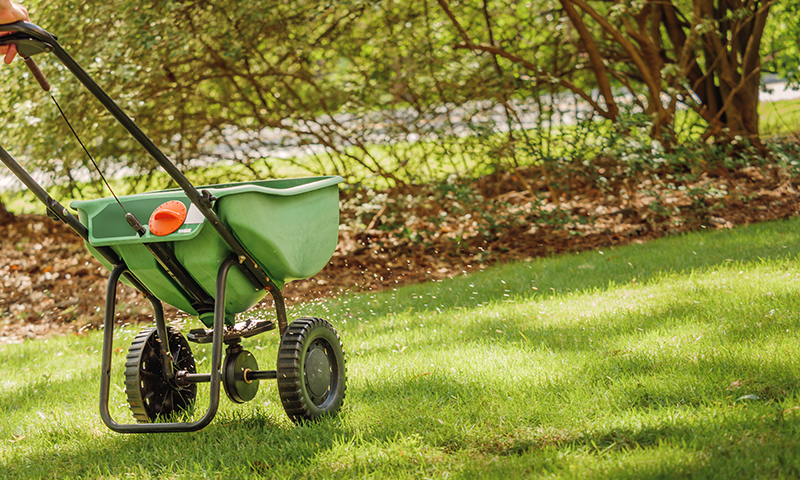
Apply half the seed in one direction and the other half at a right angle for more even coverage.
Work it in. Drag a leaf rake lightly across the surface. You want seed touching soil, not buried under it. Ryegrass sprouts best sitting right at the surface.
Feed it. Put down a starter fertilizer with phosphorus. Young roots need it.
Keep the seed damp. This is the most important stretch of the whole project. Ryegrass seed that dries out is dead seed. Water in short bursts — just enough to darken the top of the soil — and repeat several times a day when it's sunny or breezy. Keep that pattern going until you see a green haze across the yard.
Expect the first sprouts in 5 to 10 days.6 A full flush usually shows up around day 14.
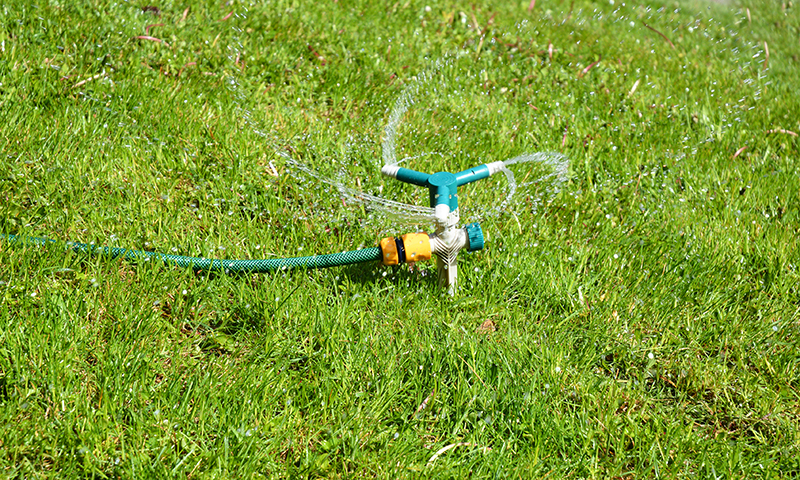
Water lightly and frequently to keep the soil surface consistently moist until perennial ryegrass begins to sprout.
Life after germination
Once the shoots are up, change your habits.
Watering. Space it out. Trade daily sprinkles for deep soakings every four or five days. Poke a screwdriver into the soil — if it slides in a few inches easily, you're watering enough.
Mowing. Let the ryegrass grow tall enough to bend over slightly before the first cut. That's usually about a month in. Keep it between 1.5 and 2.5 inches through the winter.3 Sharpen your blade. A dull mower rips ryegrass and browns the tips.
Feeding. After the second mow—around a month after germination—apply a nitrogen fertilizer to keep your winter lawn healthy. Pennington Full Season Lawn Fertilizer II is a convenient option because one application provides slow-release nitrogen for season-long feeding while helping maintain a thick, green lawn.
Traffic. Ryegrass is tough, but give it a couple of weeks of light use before the dog treats it like a wrestling mat.
Common ways homeowners make mistakes
Nearly every failure traces back to one of these:
- Seeding too early. Bermudagrass that's still growing hard will smother young ryegrass.
- Skipping the scalp. Tall bermudagrass shades out every seedling underneath.
- Letting seed dry out. One hot, windy afternoon during germination can end the whole project.
- Applying weed preventer. Pre-emergent herbicide stops ryegrass just as well as it stops weeds. Keep it off the lawn for about 12 weeks before overseeding.
- Mowing too early. New seedlings need time to root. Wait until they stand tall enough to handle a blade.
Passing the lawn back to bermudagrass
When spring arrives, it's time to shift your focus from maintaining your winter lawn to encouraging bermudagrass to green up again. For more seasonal tips, explore our spring lawn care guide. Here are a few steps to help the handoff:
- Mow lower. Drop the height one notch at a time. This stresses the ryegrass and lets sun hit the waking bermudagrass.
- Water less. Bermudagrass loves warm and dry. Ryegrass doesn't. Backing off speeds the switch.
- Skip the early nitrogen. Once the perennial ryegrass has naturally faded, apply Pennington Full Season Lawn Fertilizer II to encourage bermudagrass to green up and grow vigorously through the warm season.
By early summer, the ryegrass is gone and your bermudagrass is running full speed until fall.
Overseeding is just one part of preparing your lawn for the cooler months. Explore our Fall Lawn Maintenance Tips for more ways to keep your lawn vibrant through winter and ready for spring.
Sources
- Alabama Cooperative Extension System. "Overseeding Dormant Bermudagrass". Overseeding Dormant Bermudagrass. August 2021.
2. Michigan State University Extension. "Establishing a New Lawn Using Seed". Establishing a New Lawn Using Seed. February 2016.
3. Clemson Cooperative Extension, Home & Garden Information Center. "Overseeding With Ryegrass". Overseeding With Ryegrass. Updated: September 2024.
4. North Carolina State University, Lake Wheeler Turfgrass Field Lab (study data cited in U.S. Plant Patent Application). "American Ryegrass APMT 005, a New Turfgrass". American Ryegrass APMT 005, a New Turfgrass. October 2023.
5. University of Arizona Cooperative Extension. "Overseeding Winter Grasses into Bermudagrass Turf". Overseeding Winter Grasses into Bermudagrass Turf. October 2015.
6. Penn State Extension. "Turfgrass Species for Pennsylvania". Turfgrass Species for Pennsylvania. Updated November 2016.
7. Clemson Cooperative Extension, Home & Garden Information Center. "Managing Weeds in Fescue Lawns". Managing Weeds in Fescue Lawns. Revised: November 2022.
-
Frequently Asked Questions
How long until perennial ryegrass sprouts?About 5 to 10 days when the soil stays moist and temperatures are in range. -
Can I do this every winter?Yes. Plenty of Southern homeowners overseed year after year. Just manage the spring handoff so your Bermuda comes back strong.
-
How much seed do I need?Around 5 to 10 pounds per 1,000 square feet, depending on whether you're refreshing an established lawn or covering bare ground.
-
When do I stop the light daily watering?After the seedlings are up — usually a week to ten days in. Then switch to deeper, less frequent watering.
-
Perennial or annual ryegrass?Perennial. Finer texture, better color, and it holds up through the winter. Annual ryegrass is cheaper but coarser.
-
Will overseeding hurt my bermudagrass?Not when it's done right. Time it well and manage the spring, and your bermudagrass will bounce back with the heat.
-
Do I have to aerate?Not required. But it's a big help on compacted or hard-used lawns.


