.png?h=146&iar=0&w=301&hash=690753E2FA9563314B9D941A755BB22F)

How to Give Your Houseplants a Fall Refresh

A fall refresh is the process of cleaning, trimming, treating, and lightly fertilizing your houseplants before winter. It removes dust, pests, and damaged foliage while preparing your plants for reduced light and dormancy in the cooler months ahead.
Before temperatures drop too low, show your houseplants some love and give them a fall refresh this year. A little attention now sets them up for vibrant growth when spring returns.
- Why Give Your Plants a Fall Refresh
- Signs Your Houseplant Needs a Fall Refresh
- When and Where to Refresh Your Houseplants
- Fall Houseplant Checklist: Clean, Trim, Treat
- What Fertilizer Should I Use for Houseplants in Fall?
- How to Prep Cleaned Houseplants for Winter

Always check the undersides of leaves for unwelcome guests.
Why Give Your Plants a Fall Refresh
If your home is like most, summer ends with signs of all the fun you had. No matter how much you love your plants, they often get less attention in summer than during the months you spend indoors.
That can show up in a few ways. Some foliage may look tired. Blooming plants may have bare flower stems. Insect pests may have moved in and multiplied while you were busy outdoors. And there may be dust on the leaves.
As summer ends and fall rolls in, it's the perfect time to take a close look and catch up with your houseplants. Are they hydrated and well-nourished? How's their color? Is it time to upgrade your décor with a new decorative pot?
Healthy houseplants act as living home décor. The better they look, the better your space feels. Make your quick-fix list, then hit refresh and get started.
Signs Your Houseplant Needs a Fall Refresh
Watch for these clear indicators that a refresh is in order:
- Dusty leaves that look dull or block light
- Brown leaf tips or crispy edges
- Yellowing or dropping leaves
- Visible pests like mealybugs, spider mites, or scale
- Depleted soil level that has dropped below the original line in the pot
- Leggy growth or stretched stems from summer
- Spent flower stems or unsightly foliage left from the growing season

Fall color outdoors = time to clean indoor plants.
Begin your fall refresh 2–4 weeks before nighttime temperatures consistently drop below 50°F. If you start early, you can take the easy route and clean your houseplants outdoors.
Plan your plant spa day for a day when outdoor temperatures are close to the temperatures inside your home — ideally between 60–75°F. That helps avoid dramatic reactions like dropping leaves, flowers, or fruit from temperature shock.
Even if the weather seems mild to you, indoor plants are not used to stronger sunlight and gusty winds. Set up shop in a warm, shaded spot that's protected from direct sun and strong wind.
If you're an early riser, use those warm fall morning hours before the sun gets intense. If you have a lot of plants, work with just one or two at a time so none sit outside too long. A short stay outdoors protects your plants from sunburn and stress.
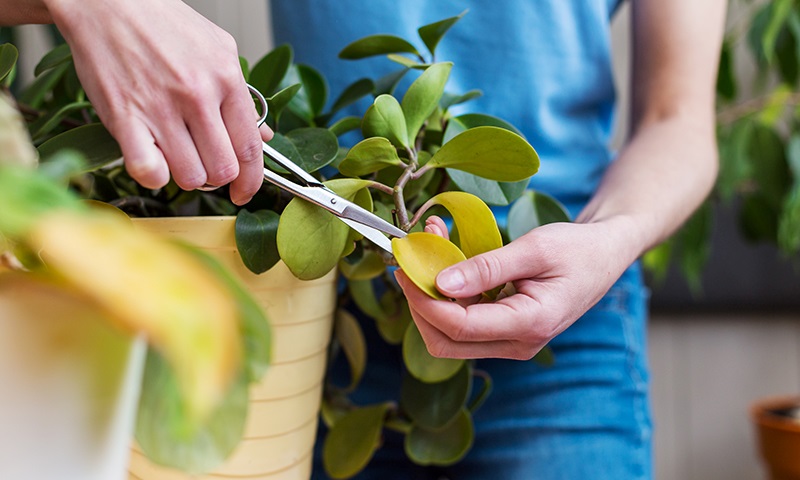
Always follow nature's lead when trimming or shaping plants.
Fall Houseplant Checklist: Clean, Trim, Treat
Tools and Materials Needed
- Soft cloth or microfiber towel
- Watering can with warm water
- Garden scissors or pruners
- Insecticidal soap or Sevin Ready-to-Use₂
- Fresh potting mix
- Low-dose, balanced fertilizer (such as Pennington Easy-Dose Indoor Houseplant Food 2-3-2)
Step-by-Step: Clean
- Step 1: Fill your watering can with warm water and give each plant a gentle shower to rinse away dust.
- Step 2: Wipe the tops and undersides of leaves with a soft, damp cloth to remove any remaining dust.
- Step 3: Pat leaves dry with a clean cloth to prevent water spots.
Step-by-Step: Trim
- Step 1: Inspect each plant and identify spent stems, brown tips, and yellow leaves.
- Step 2: Use clean garden scissors or pruners to trim damaged areas.
- Step 3: Follow the natural shape of the leaf or plant — cut along the leaf's edge or back to a healthy stem.
Step-by-Step: Treat
- Step 1: Check each plant thoroughly for insect damage and pests (see common pests below).
- Step 2: Apply your treatment outdoors only. Never spray indoors.
- Step 3: Allow the insecticide spray to dry completely — typically 2–4 hours — before bringing plants back inside.
With Sevin Ready-to-Use₂, you can kill and control common houseplant pests like mealybugs, whiteflies, thrips, and mites.
Common Houseplant Pests to Check for in Fall
- Mealybugs: white, cottony masses on stems and leaf joints
- Spider mites: fine webbing on the undersides of leaves
- Scale: small brown or tan bumps along stems and leaf veins
- Whiteflies: tiny white insects that fly up when leaves are disturbed
- Thrips: slender insects that leave silvery streaks on foliage
- Fungus gnats: small black flies around the soil surface
What Fertilizer Should I Use for Houseplants in Fall?
Use a low-dose, balanced fertilizer like a 2-3-2 formula for houseplants in fall. Products such as Pennington Easy-Dose Indoor Houseplant Food 2-3-2 provide gentle nutrition that supports roots and foliage without encouraging excessive growth before winter dormancy.
Avoid high-nitrogen fertilizers in fall. Over-fertilizing this time of year can trigger tender new growth that's vulnerable to the lower light and cooler temperatures of winter dormancy.
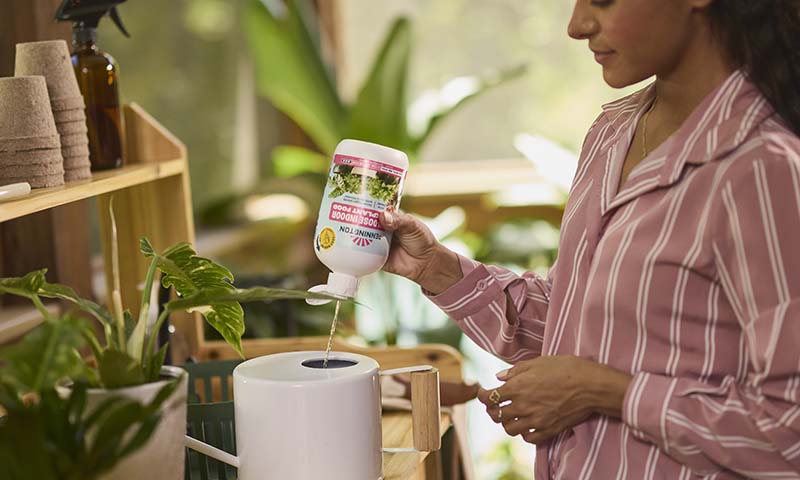
Give your houseplants a fresh start for fall with nutrient-rich soil and gentle plant care essentials.
How to Prep Cleaned Houseplants for Winter
Once your houseplants are clean and cozy, give them one final boost before winter. Top your containers with a layer of fresh potting mix. Over time, the soil level in containers naturally drops, and the original nutrients are long gone.
With Pennington Full Season Potting Mix, you can revitalize your container soil with a blend of natural and organic ingredients designed to work in harmony with nature. Add a layer to bring the soil back up to the old soil line, which is usually visible on the side of the pot or on the plant stem.
If it's time for repotting, this premium all-purpose potting mix is ideal to take your plants into next year and beyond. Repotting instructions are right on the label.
Then let Pennington Easy-Dose Plant Starter help your plants settle into their new pots. This plant treatment helps seedlings and transplants thrive with vitamin B1 and a blend of plant micronutrients.
For the final step, feed your plants a sound fall meal with Pennington Easy-Dose Indoor Houseplant Food 2-3-2. Infused with molasses, this liquid blend of essential plant nutrients can help your plants look and feel their best in the months ahead.
Your plants will appreciate the autumn attention and a little TLC.
At Pennington, we're here to help you garden your way indoors and out — from fall vegetable gardens to houseplant spa days. Have a question? We'd love to hear it.
Always read product labels thoroughly and follow instructions, including guidelines for listed pests.
-
Frequently Asked Questions
How often should I fertilize houseplants in fall?Feed houseplants once in early fall with a low-dose, balanced fertilizer like a 2-3-2 formula. Stop fertilizing as plants enter winter dormancy and resume light feeding in early spring. -
When is the best time for a fall houseplant refresh?Start your refresh 2–4 weeks before nighttime temperatures consistently drop below 50°F. This gives plants time to settle before winter dormancy.
-
Is it safe to take houseplants outside for cleaning?Yes, when daytime temperatures are between 60–75°F and the spot is shaded from direct sun and strong wind. Keep visits short to avoid stress.