.png?h=146&iar=0&w=301&hash=690753E2FA9563314B9D941A755BB22F)

Fall Lawn Maintenance Tips

Fall lawn maintenance is the set of seasonal tasks — like feeding, seeding, aerating, and weed control — that you do from late summer through the first frost to help your lawn recover from summer stress and store energy for winter. The timing matters: cool soil and mild air create the best conditions of the year for roots to grow, so the work you do now sets up a thicker, greener lawn next spring.
With lawn care high on the list of things you take pride in, autumn is no time to relax. There's plenty of leisure time ahead, but now's the time to finish the season strong. Check your way through the following lists, based on the type of grass you grow. You can get a jump on spring and help set your neighborhood's bar for lawn care a little higher next year.
Table of Contents
Fall Lawn Care Checklist for Cool-Season Grass
- Test Your Soil
- Fertilize Your Lawn
- Overseed Thin Areas
- Repair Bare Spots
- Dethatch if Needed
- Aerate Compacted Soil
- Water Properly
- Continue Mowing
- Control Fall Weeds
- Remove Fallen Leaves
Fall Lawn Care Checklist for Warm-Season Grass
- Test Your Soil
- Stop Fertilizing at the Right Time
- Overseed for Winter Color
- Skip Dethatching and Aeration
- Adjust Watering
- Control Weeds
- Manage Fallen Leaves
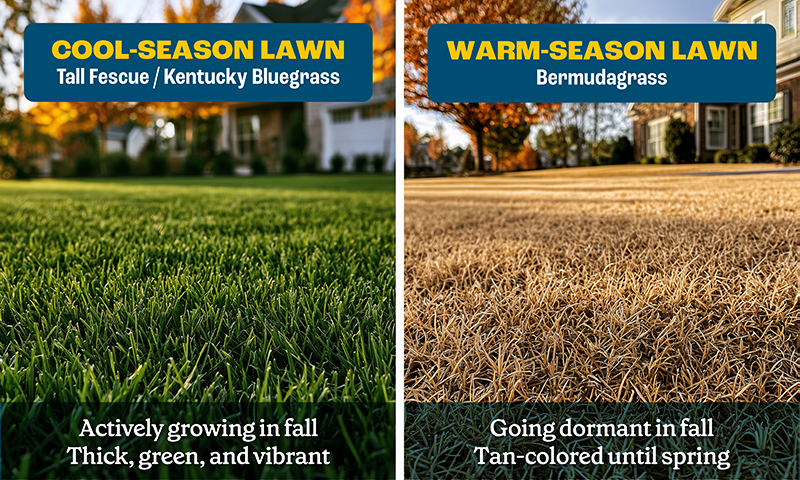
Cool-season and warm-season grasses respond differently to fall weather and require different maintenance.
What Fall Lawn Care Tasks Should You Do for Cool-Season Grass?
As temperatures drop in late summer and early fall, cool-season grasses — including Kentucky bluegrass, perennial ryegrass, tall fescue, and fine fescue — enter their most active growth and care period of the year.1 The following tasks help cool-season lawns thrive:
- Test your soil. Fall soil testing takes the guesswork out of managing your lawn's soil pH and nutrition. Make recommended fixes in fall, and soil amendments have extra time to work before spring. Pennington Fast Acting Lime, for example, starts working right away to balance soil pH for a greener lawn. Test healthy lawns every three to four years, and problem areas every year.3
- Feed your lawn. Why do people overseed their lawns in fall? Feed cool-season lawns in early fall — September is the most important time — to promote root growth before winter.1 A high-nitrogen fertilizer like Pennington Full Season Lawn Fertilizer 32-0-5 helps lawns survive winter.
- Overseed thin lawns. Overseeding (spreading seed over existing turf to thicken growth) pays off with thick, strong spring grass. Overseed at least 45 days before your first expected frost so grass has time to establish before cold weather. For much of the northern U.S., that typically means seeding by early September for best results.2
Not sure which grass seed to choose? If you're new to lawn care Pennington Smart Seed combines premium grass seed and fertilizer in one product. Plus, its grass varieties are bred to stay greener under drought conditions, so your lawn stays greener longer with less water. Ready to take your lawn to the next level? Pennington The Rebels is built for homeowners who want premium turf performance. Its varieties grow 40% more roots for stronger, more resilient lawns that better withstand disease, foot traffic, and challenging growing conditions.
- Repair bare spots. With soil test fixes underway, bare spots are ready to fix. Fall temperatures and rain support quick growth. Pennington Smart Patch II combines premium seed, pro-grade fertilizer, and mulch in one easy product.
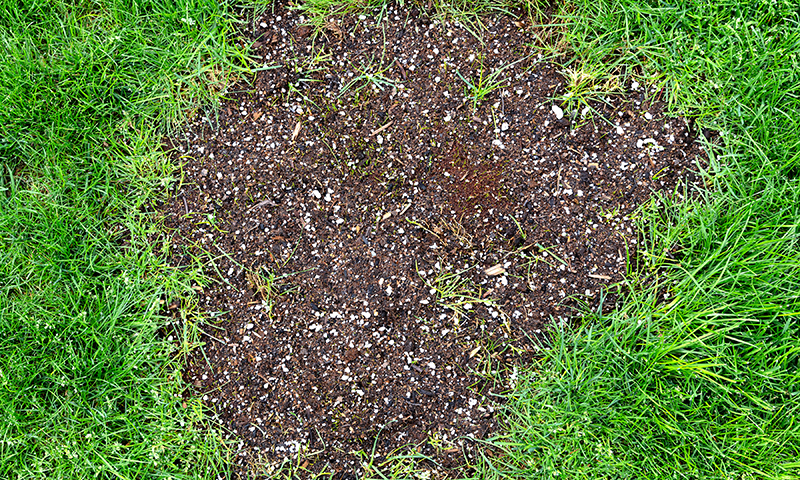
Repairing bare spots in early fall gives new grass time to establish before winter.
- Remove excess thatch. Thatch (the layer of dead organic matter between grass and soil) can help lawns when it's thin. But when it builds up past 1/2 inch, it blocks water and nutrients and invites disease. Dethatching tools range from handheld dethatching rakes to vertical mowers, sometimes called power rakes, which use steel tines to cut into the thatch layer and pull it to the surface for removal.4
- Aerate compacted soil. Compacted soil limits root growth and oxygen. Core aeration (removing small plugs of soil to reduce compaction) is the most effective fix. Plugs break down on the surface, and the holes left behind let air, water, and nutrients in.4 Aerate during active fall growth.
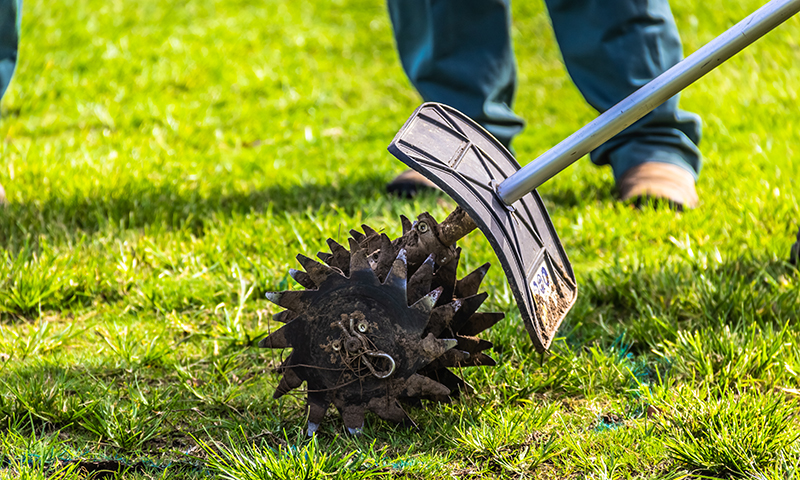
Core aeration relieves soil compaction so water, air, and nutrients can reach grass roots.
- Keep watering. Actively growing cool-season grass needs water. As fall arrives, you can stretch out regular watering and let rainfall help. Established lawns generally need about 1 inch of water per week from rain or irrigation. As temperatures cool and growth slows in fall, you can water less frequently.5
- Keep mowing. Keep mowing at your lawn's regular height until growth stops for the season. Avoid letting grass grow overly tall heading into winter — matted-down grass can trap moisture and increase the risk of winter fungal disease. Never remove more than one-third of the blade height in a single mowing.1
- Control weeds. Weeds are still active in early fall. An application of Pennington Full Season Weed & Feed with Crabgrass Control 25-0-8 helps control listed weeds. Use weed & feed only on established, listed cool-season lawns — avoid newly seeded areas.
- Clean up leaves. Mats of fallen leaves smother grass and invite disease. Mow and mulch small amounts, but rake, bag, or compost large piles.
What Fall Lawn Care Tasks Should You Do for Warm-Season Grass?
Cool fall temperatures tell warm-season grasses their peak is over. These grasses — like bermudagrass, centipede grass, zoysia grass, and bahiagrass — grow most in summer and go dormant after fall's first killing frost. Because they're slowing down, warm-season grasses need different care from cool-season ones. These tasks keep them on track:
- Test your soil. Fall soil testing helps every lawn, no matter the grass type. Follow the recommendations now, and you'll be ahead in spring.
- Stop fertilizing. Time your last feeding six to eight weeks before your first fall frost. For Bermudagrass, four to five weeks before the frost date is fine. Fertilizing later can disrupt dormancy and leave your lawn weak in winter.6
- Overseed for winter color. Skip the brown, dormant look by overseeding with a cool-season grass like Pennington Fairway Supreme Perennial Ryegrass, which stays green through winter. Wait until night temperatures drop and your warm-season grass starts losing color.6 If you only want to thicken the lawn, hold off until spring.
- Skip dethatching and aerating. Both can help warm-season lawns, but they're hard on grass. Save them for spring and early summer, when your lawn is growing and can recover quickly.
- Let rainfall take over. Water as long as your lawn is growing, then let nature handle it. If you overseed for winter color, keep a regular watering schedule.
- Hit weeds hard. Bright green, cool-season weeds stand out in dormant warm-season lawns. Treat with a post-emergent herbicide made for actively growing weeds. For dormant Bermudagrass, use Image Herbicides Nutsedge Killer for Southern Lawns (Concentrate or Ready-to-Spray).
- Manage leaves. Keep grass clear of fallen leaves. Mulch small amounts and let them lie, but remove heavy piles so grass can breathe.
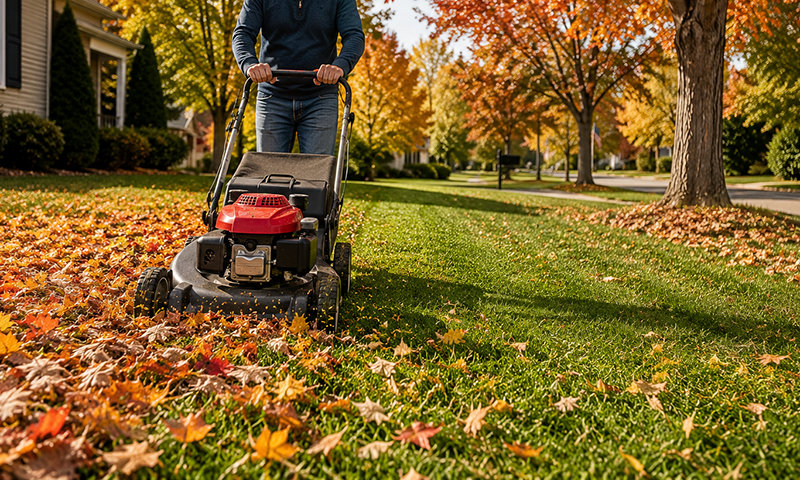
Mulching small amounts of fallen leaves returns organic matter to the soil while keeping your lawn vibrant.
Fall lawn care isn't one-size-fits-all, but the lawn of your dreams is within reach. Take time now to check off your fall tasks, and take pride in a strong season finish.
Sources
- MU Extension. “Cool-Season Grasses: Lawn Maintenance Calendar.” Cool-Season Grasses: Lawn Maintenance Calendar | MU Extension. Revised April 2025
- MU Extension. “Cool-Season Grasses: Lawn Establishment and Renovation.” Cool-Season Grasses: Lawn Establishment and Renovation | MU Extension. Revised October 2022
- MU Extension. “Soil Testing for Lawns.” Soil Testing for Lawns | MU Extension. Revised March 2026
- UMN Extension. “How to control thatch in your lawn.” How to control thatch in your lawn | UMN Extension. Reviewed in 2024
- Iowa State Extension. “Watering Home Lawns”. Watering Home Lawns | Yard and Garden. Last reviewed: June 2022
- Clemson Extension. “Bermudagrass Yearly Maintenance Program”. Bermudagrass Yearly Maintenance Program | Home & Garden Information Center. Revised: Nov 2, 2018
-
Frequently Asked Questions
Why is fall the best time to overseed?Fall offers warm soil, cooler air, and steady rainfall — the ideal mix for grass seed to germinate and root. Weed pressure is lower than in spring, so new grass faces less competition. Seeded in early fall, cool-season grass has time to establish before winter and bounce back strong in spring. -
When should I stop fertilizing my lawn before winter?For cool-season lawns, apply your last feeding about six weeks before your first expected frost. For warm-season lawns, stop six to eight weeks before frost (four to five for Bermudagrass). Fertilizing too late can interfere with dormancy and weaken the lawn over winter.
-
Should I aerate my lawn in fall?Aerate cool-season lawns in fall during their peak growth, since they recover quickly. Skip aeration on warm-season lawns in fall and wait until spring or early summer, when those grasses are actively growing.
-
How short should I cut my grass for the final fall mow?Keep mowing at your lawn's regular height until growth stops for the season. Avoid letting grass grow overly tall heading into winter — matted-down grass can trap moisture and increase the risk of winter fungal disease. Never remove more than one-third of the blade height in a single mowing.
-
Do I still need to water my lawn in fall?Yes, established lawns generally need about 1 inch of water per week from rain or irrigation. As temperatures cool and growth slows in fall, you can water less frequently.
-
Should I rake leaves or mulch them with the mower?Mulch small amounts of leaves with your mower to feed the soil. Rake, bag, or compost heavy layers so they don't smother the grass and cause disease.