.png?h=146&iar=0&w=301&hash=690753E2FA9563314B9D941A755BB22F)

How to Attract House Finches to Your Backyard

Sunflower chips offered in tube or hopper feeders are the fastest and most reliable way to attract house finches, with whole black oil sunflower seed serving as another popular option, especially when feeders are placed near trees or shrubs that provide protective cover. Adding a clean water source and natural vegetation rounds out the essentials these widespread songbirds need to visit—and stay—in the backyard year-round.
Quick Tips for Attracting House Finches
- Fill feeders with sunflower chips or whole black oil sunflower seeds.
- Use tube, hopper, or platform feeders with ample perching space.
- Place feeders near trees, shrubs, or brush piles for cover.
- Provide fresh water in a birdbath, fountain, or heated basin year-round.
- Add nyjer seed to a separate feeder to attract house finches alongside goldfinches.
- Keep seed dry and mold-free by cleaning feeders regularly.
- Plant native trees, berry bushes, or weedy patches for natural food and shelter.
Table of Contents
- What Does a House Finch Look Like?
- Where Do House Finches Live?
- What Do House Finches Eat?
- Best Feeder Types for House Finches
- Where to Hang a Finch Feeder
- How Long Does It Take Finches to Find a Feeder?
- Why House Finches May Stop Visiting
- What Type of Cover Do House Finches Need?
- Do Birdbaths Help Attract House Finches?
What Does a House Finch Look Like?
House finches are small songbirds with distinct sex-based coloring. Males display rosy red feathers on the head, throat, and chest, with brown streaking on the belly and back. Females are mostly brown with blurry streaking across the chest and lack red coloring.
Their song is a long, warbling series of notes, often ending in a buzzy "wheer." House finches are found across most of North America, making them one of the most recognizable backyard birds on the continent.
Where Do House Finches Live?
House finches range throughout much of the United States and Mexico. Originally native to the western U.S., they were introduced to the eastern states and have since spread across nearly the entire country.
They thrive in a wide variety of habitats, including:
- Cities and suburbs
- Farmland and rural properties
- Canyons and open woodlands
- City parks and backyards
Because of this adaptability, house finches are likely already living near most North American homes—even if they haven't yet been spotted at the feeder.
What Do House Finches Eat?
House finches are primarily plant eaters, feeding on seeds, buds, and berries. Their diet includes:
- Sunflower chips — the preferred feeder food for house finches because they’re easy to eat, mess-free, and rich in energy. Pennington Recipe Selects Sunflower Chips provide high-quality nutrition and attract finches quickly and consistently.
- Whole black oil sunflower seeds
- Shelled sunflower seeds
- Nyjer (thistle) seed
- Safflower seeds
- Weed seeds foraged from the ground
- Buds and berries from trees and shrubs
Specially formulated mixes like Pennington Feeding Frenzy Finch Favorites Tube Feeder Blend bring together many of these preferred ingredients in one convenient option, making it easy to attract finches consistently. For added variety and energy—especially during colder months or periods of high activity—you can also offer Pennington Feeding Frenzy Sunflower Treat Suet Cake, made with nutrient-rich sunflower hearts and formulated with the highest fat content for the most efficient energy, helping support birds year-round.
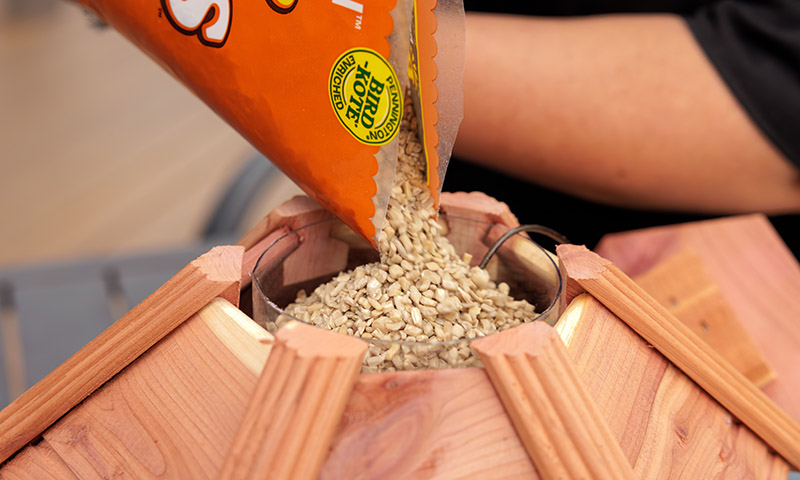
House finches prefer easy-to-eat sunflower chips, followed by whole black oil sunflower seed, along with Nyjer and finch-specific blends designed for easy feeding.
Best Feeder Types for House Finches
House finches will use most standard feeder styles, but a few work especially well:
- Tube feeders – Multiple ports allow several finches to feed at once and discourage larger, more aggressive birds.
- Hopper feeders – Hold a larger volume of seed and provide stable perches for flock feeding.
- Platform feeders – Open trays attract ground-feeding flocks and accommodate mixed seed blends.
- Nyjer (thistle) feeders – Useful when offering nyjer alongside sunflower chips or whole black oil sunflower seed, especially for shared feeding with goldfinches.
Larger round-style feeders work well for yards that attract big flocks, since they provide more feeding space and need refilling less often. Always choose the best type of feeder for your feathered friends.
Where to Hang a Finch Feeder
Place finch feeders within a few feet of trees, shrubs, or other tall vegetation. Birds feel safer when cover is nearby and will discover and use feeders more quickly in those locations.
If only a small tree or post is available, hanging the feeder directly from it—or positioning it just beside it—still helps. House finches will use feeders in open areas, but visit more consistently when nearby shelter and escape routes are available.
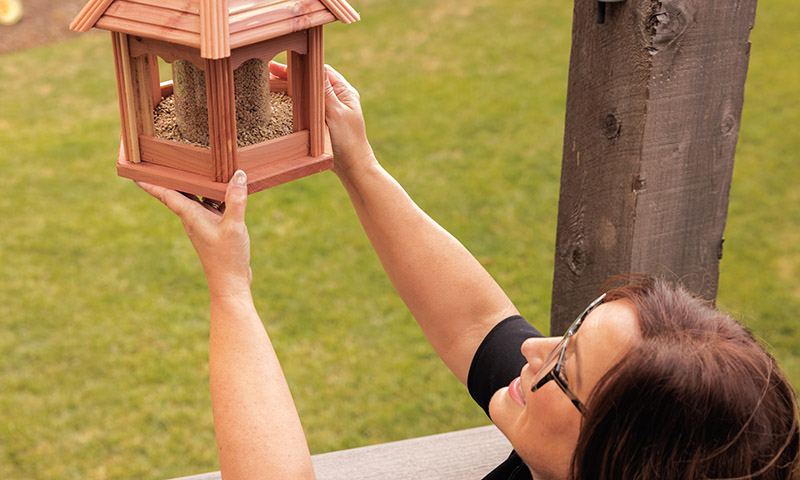
Hanging a bird feeder near trees, shrubs, or posts gives finches quick access to nearby cover and helps them feel safer while feeding.
How Long Does It Take Finches to Find a Feeder?
Most house finches discover a new feeder within a few days to a few weeks, depending on:
- Feeder placement (closer to cover speeds discovery)
- Local population density of house finches
- Presence of nearby established feeders
- Type of seed offered, with sunflower chips typically attracting finches fastest
House sparrows or other common species often arrive first. Once a few birds find the feeder, others usually follow. Patience and consistent seed availability are the main factors.
Why House Finches May Stop Visiting
The most common cause of sudden drop-offs is spoiled seed. Wet, moldy, or clumped food will drive birds away and can spread disease.
To keep house finches returning:
- Clean the feeder regularly with mild soap and water.
- Refill with fresh, dry seed.
- Avoid overfilling—use smaller amounts so seed turns over faster.
- Check feeders more often during humid or rainy weather.
Nyjer seed spoils especially fast when exposed to moisture, while sunflower chips and whole black oil sunflower seeds should also be replaced regularly to maintain freshness. Birds may also temporarily shift to a neighbor's feeder; with clean food and patience, they typically return.
What Type of Cover Do House Finches Need?
Cover is the hardest part of attracting birds, but also one of the most important. House finches need places to hide from predators like sharp-shinned hawks and Cooper's hawks.
Effective cover options include:
- Large trees for perching and escape
- Dense shrubs for shelter and nesting
- Berry bushes, including raspberry patches left untrimmed
- Brush piles made from pruned tree limbs
A dense pile of cut branches in a quiet corner of the yard can offer instant protection where mature plantings aren't possible. Birds will burrow inside the pile when hawks approach, and the structure can later be tucked along a fence line for a tidier look.
Do Birdbaths Help Attract House Finches?
Yes—water is one of the most overlooked attractors and often brings birds in faster than seed alone. House finches drink and bathe daily, and a clean water source gives them another reason to choose one yard over another.
Effective options include:
- Pedestal birdbaths – Classic, simple, and easy to clean.
- Fountain-style baths – Moving water attracts birds by both sight and sound, especially in summer.
- Heated birdbaths – Provide unfrozen water during winter in cold climates.
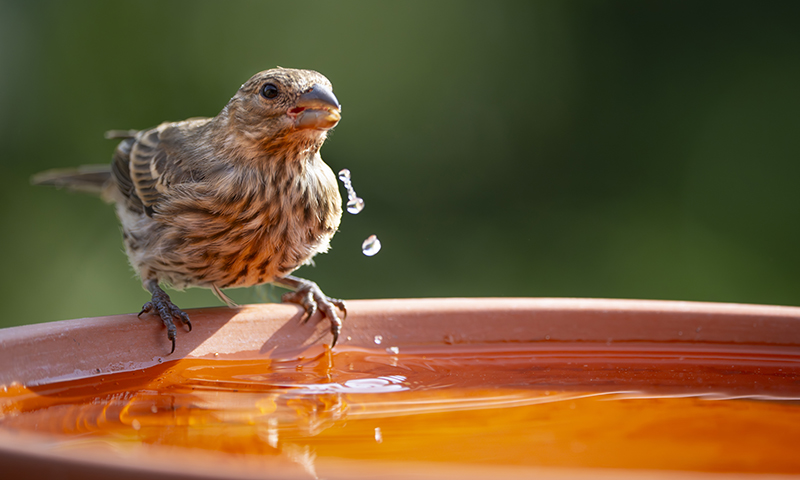
A clean birdbath provides essential drinking and bathing water, encouraging house finches to visit your yard more often.
Place the birdbath near cover, just like a feeder, and refresh the water regularly to prevent algae and mosquito breeding.
With the right combination of food, water, and cover, attracting house finches to your backyard is simple and rewarding. By offering their favorite seeds, placing feeders in safe, visible locations, and maintaining a clean feeding area, you can enjoy the color and cheerful song of these friendly birds year-round. Read up on some more tips for attracting wild birds: How to Attract Wild Birds to Your Garden
Always read product labels and follow instructions carefully.
-
Frequently Asked Questions
What is the favorite food of house finches?Sunflower chips are the preferred feeder food for house finches because they are easy to eat and high in energy. Whole black oil sunflower seed is another top choice. -
Where should a finch feeder be placed?Hang it within a few feet of a tree or shrub so finches feel safe and can quickly retreat from predators.
-
Can house finches be attracted in winter?Yes. House finches stay year-round across most of their range and rely heavily on feeders and unfrozen water during cold months.
-
How can I tell male and female house finches apart?Males show red on the head, throat, and chest, while females are streaky brown with no red coloring.
-
Why are fewer finches visiting my feeder?Spoiled or moldy seed is the most likely cause. Clean the feeder, refill with fresh seed, and visits typically resume within days.