.png?h=146&iar=0&w=301&hash=690753E2FA9563314B9D941A755BB22F)

All About Jays and How to Attract Them

When most North American bird lovers think of jays, the common Blue Jay is the first wild bird that comes to mind. But North America is home to at least 10 species of jays, with about four times that number worldwide.
Though only one species is called Blue Jay, most (but not all) North American jays sport feathers with varied hues of brilliant blues. With color as a starting clue, jays are a great group of wild birds to build your bird ID skills. Across the board, jays are known as one of the most intelligent — and loudest — visitors to backyard feeders, too.
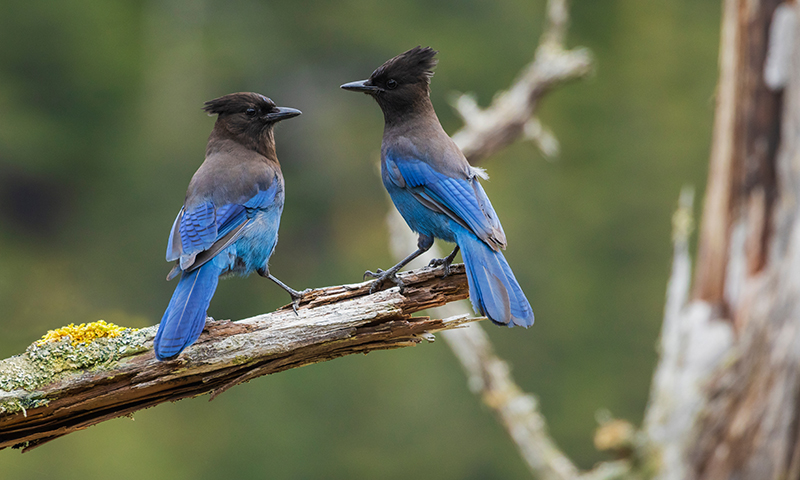
Steller’s Jay is the only dark jay with a crested head.
How to Identify Jays
With so many jay species to choose from, three popular blue-colored jays exemplify the differences found among this group of colorful birds: Blue Jay, Steller’s Jay and California Scrub-Jay.
- Blue Jays: The Blue Jay stands out from other wild birds with its fluffy crested head and loud, harsh-sounding calls of “jay-jay-jay.” Its throat and belly feathers are pale grayish white, but the rest of its body is brilliant blue, with black and white accents on wings and tails. A black mark around the neck, often referred to as a necktie or necklace, completes the Blue Jay’s distinctive look.
- Steller's Jays: Steller’s Jay, like the Blue Jay, has a prominent crest, but its head and neck are dark grayish black. Their body, including their bellies, is dark blue. Wing and tail feathers have black bars. Some Steller’s Jays have blue streaks on their forehead, but others have white forehead streaks — the only white on these dark, crested jays. The staccato “shook-shook-shook” calls of Steller’s Jay ring loud, sharp and strong.
- California Scrub-Jays: California Scrub-Jays (and close relatives like Woodhouse’s Scrub-Jay) lack the crested head that the Blue Jay and Steller’s Jay have. Their rounded heads, wings and long tails are bright azure blue. A large gray patch fills their upper back, while their throat, belly and “eyebrows” are nearly white. Other than mating calls, these extra-vocal jays communicate through a variety of loud, reprimanding calls.
Blue Jay, Steller’s Jay and California Scrub-Jay are all large songbirds (even though their calls aren’t always sweet). Bigger than robins, but smaller than crow cousins, these common jays typically measure between 9 and 12 inches from head to tail. Across the three species, male jays are generally larger and heavier than females, but the difference is slight.
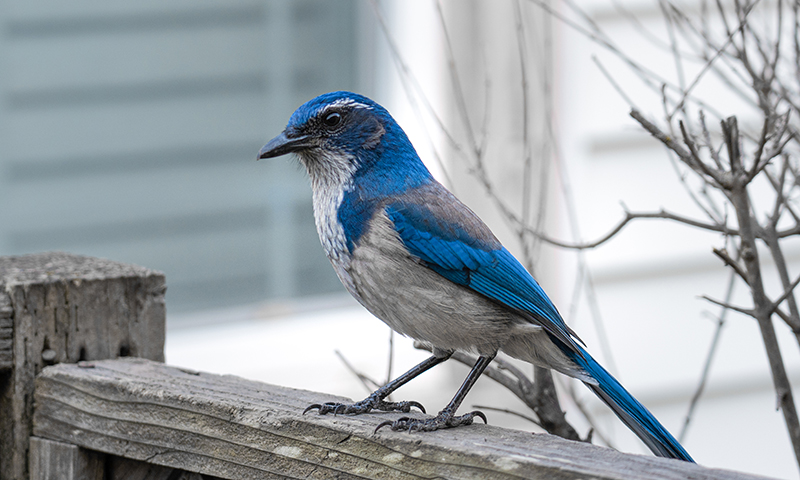
California Scrub-Jays have stout bills perfect for cracking acorns.
Where Do Jays Live
Unlike other common jay species, Blue Jays have a very large year-round territory, covering the eastern two-thirds of the United States. Their migration habits remain a bit of a mystery, even to the world’s best ornithologists. Blue Jays remain in their territories, for the most part, but some migrate within their range. Some Blue Jays occasionally migrate farther south in winter, but not reliably and not every year. They prefer to nest high up in dense trees and evergreens.
Steller’s Jays are found throughout the western United States. Their year-round territory stretches north along the Canadian coast into Alaska, and south into Mexico and Central America. Like Blue Jays, some Steller’s Jays “migrate” within their range. For this species, they often move from higher elevations to lower elevations nearby. Steller’s Jays pick nesting spots in evergreens, up high or very low.
California Scrub-Jays are found throughout the area west of the Rocky Mountains. Their year-round territory ranges from Canada into Mexico. These non-migratory jays stake out permanent territories and generally move only when hardships, such as food shortages or other environmental challenges, make it necessary. As their name suggests, these jays usually nest in “scrub” bushes and low-growing trees in dry lowlands and woodlands.
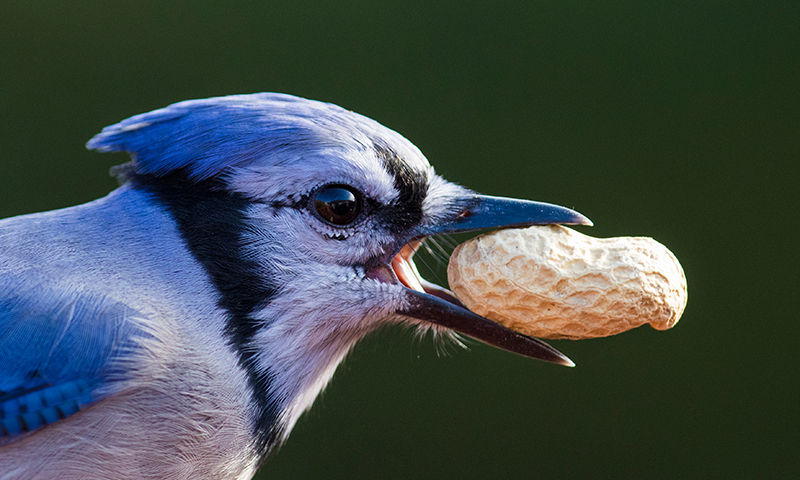
Jays love peanuts and peanut-based feed blends and suet cakes.
What Do Jays Eat
Preferred menu items for North American jays vary based on their territories and the regional native plants and insects that round out their food sources. As a rule, they’re not picky eaters, but they are known to pick through food at feeders.
Across jay species, acorns are a favorite jay food in the wild. When visiting your feeders, their preferences run toward peanuts, sunflower seeds and suet. Hopper and gazebo feeders, and open tray or platform feeders suit these large birds well.
Jays can sometimes be aggressive toward other wild birds at backyard feeders. You can quiet the competition by filling some feeders with less-favored food for other birds. Then focus on bird food and feeder combinations that keep jays contented and focused on their feast.
A few Pennington Wild Bird combos to try:
- Pennington Feeding Frenzy Bits & Chips No Mess Blend, packed with peanut bits and sunflower chips, is the perfect match for the Pennington Cedar Gazebo Bird Feeder — and for backyard birders who don’t like mess. This no-shell, no-waste nut and seed blend attracts jays and helps keep your feeding area nice and clean. Constructed from beautiful, renewable, weather-resistant Eastern Red Cedar, this classic feeder’s open window design optimizes your view of visiting jays.
- Pennington Feeding Frenzy Cardinal & Songbird Suet Nugget Blend, another jay favorite with peanut-suet nuggets and black oil sunflower seeds, pairs well with our Pennington Cedar Nature's Friend Bird Feeder. This energy-rich blend of jay favorites provides fuel year-round, including during cold winter months. The durable classic hopper feeder, made of naturally weather-resistant Eastern Red Cedar, is easy for you to fill and easy for jays to empty.
- Pennington Classic Peanuts, in-the-shell, are sure to have visiting jays in peanut heaven when combined with our Pennington Cedar Hanging 2 in 1 Bird Bath/Feeder in feeder mode. A terrific source of energy and proteins, this simple and sought-after food helps jays and other feeder visitors stay strong and healthy in their year-round homes. Constructed from renewable, weather-resistant Eastern Red Cedar, the 2-in-1 open tray feeder with removable water tray doubles as a bird bath in warmer months.
- Pennington Feeding Frenzy Berry Treat Suet Cake or Pennington Feeding Frenzy Peanut Delight No Melt Suet Dough makes year-round feeding a snap when paired with Pennington Feeding Frenzy EZ Fill Suet Basket bird feeder. These suet cakes are fully consumable and suit year-round feeding.
(Want to extend a special welcome to your jay visitors? Try our Pennington Copper Roof Café, a hopper style feeder with two — yes, two — suet baskets on board.)
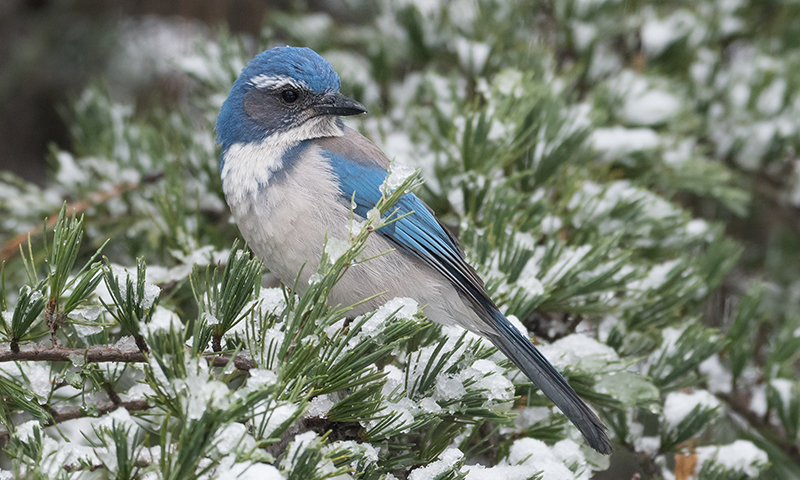
Plants provide winter shelter and spring nesting spots for non-migratory jays.
How to Attract Jays
To invite more jays to your yard and keep them there, let them know your home is a reliable source of food year-round. Provide a source of clean water for drinking and bathing and refill regularly. (Jays are notoriously enthusiastic when they bathe.)
Gardening with native plants for wild bird gardens and plants that provide year-round bird benefits, like good nesting spots for jays, helps create an environment that lets jays know they’re welcome there.
Whatever your choices and whatever your birding favorites, remember we’re here to help. We’re Pennington. We’re bird lovers, too, and we’d love to hear from you.
Always read product labels thoroughly and follow instructions.