.png?h=146&iar=0&w=301&hash=690753E2FA9563314B9D941A755BB22F)

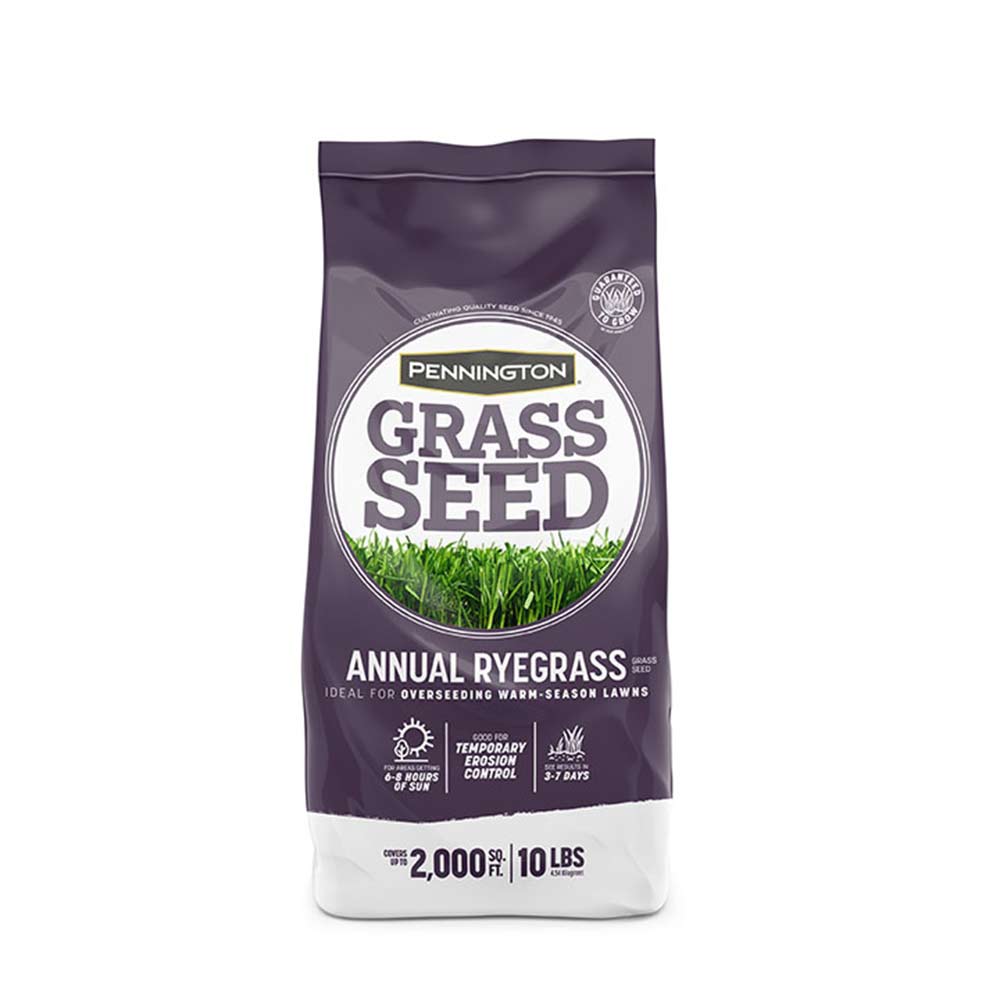
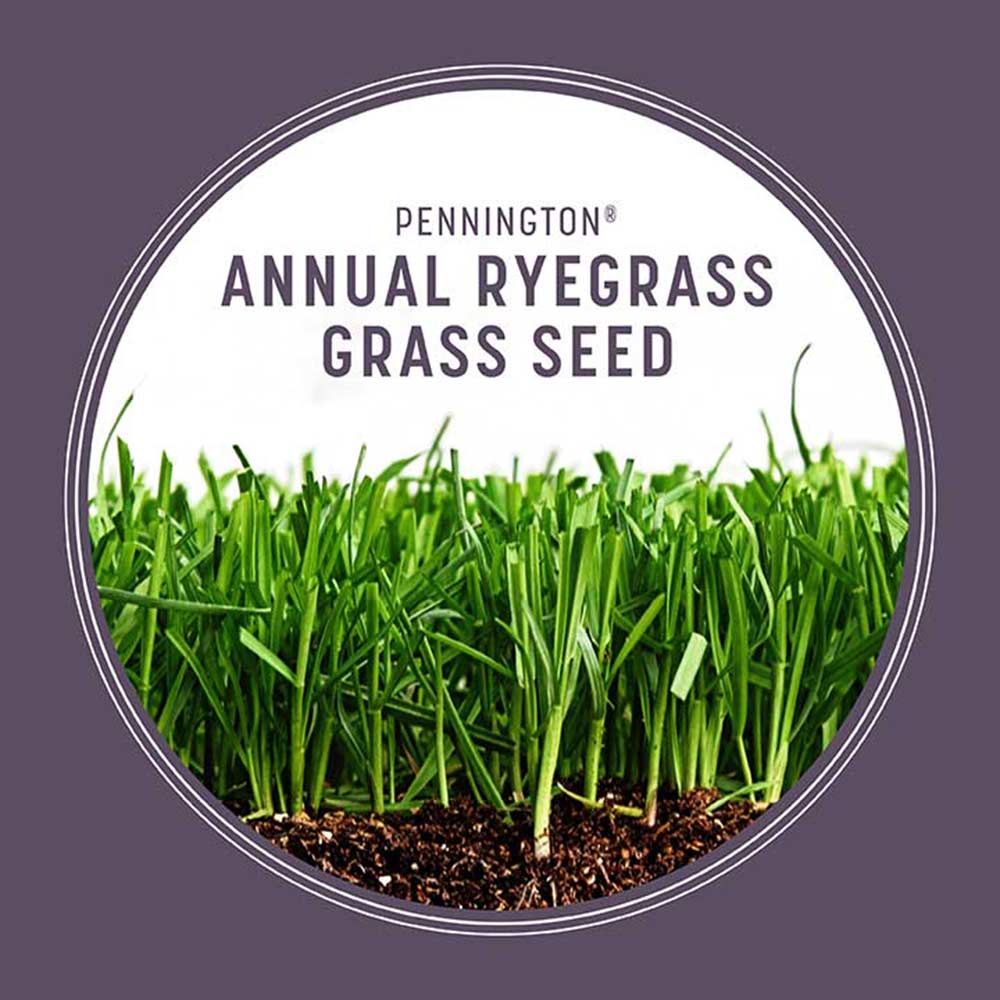

Pennington Annual Ryegrass
Enjoy a fast-growing, vibrant temporary lawn with Pennington Annual Ryegrass. Annual Ryegrass is known for fast establishment and quick color. Whether you are looking for temporary winter color for a southern lawn or temporary support for a permanent northern lawn, this grass seed is the ideal choice. Plus, it is disease-resistant and can withstand foot traffic from friends, family and pets. This grass seed will flourish in lawns that receive 6 to 8 hours of sun. Plant it in the early spring or early fall and see results within 3 to 7 days. One pound of seed covers up to 200 square feet for thin lawn support in permanent northern lawns and 100 square feet for winter overseeding. While most grass seed companies buy their seed on the open market, we are the only major grass seed company that works directly with a network of dedicated growers. Built on decades of trust and integrity, our relationships with seed growers and their families now span multiple generations. Our legacy of working directly with farmers to bring you the finest grass seed possible helps ensure their success and ours. At Pennington, we know our seed and the farmers who grow it. From field to final product, that's the Pennington way.
Size
- Ideal for overseeding southern lawns for green winter grass
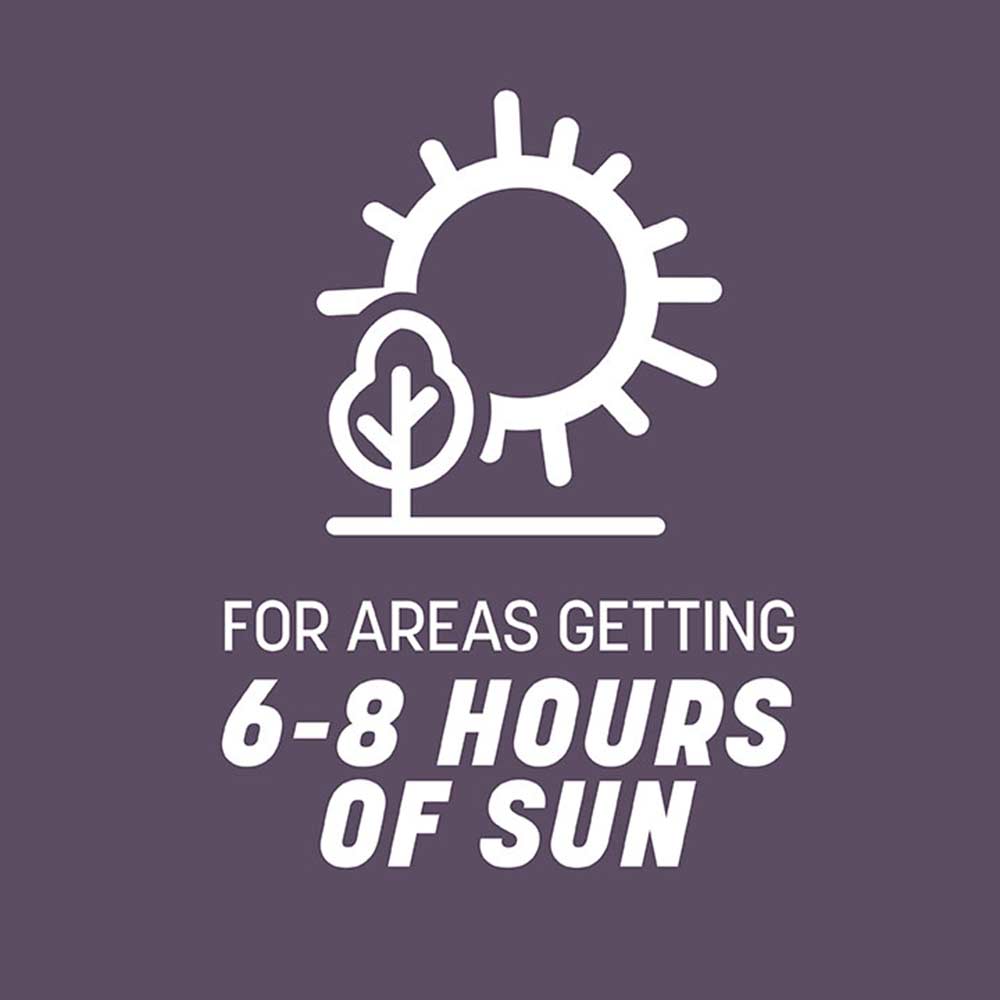
- For areas getting 6 to 8 hours of full sun
- See results in 3 to 7 days
- Ideal for overseeding Bermuda, Zoysia, and other warm-season grasses
- Annual rye is great for temporary thin grass support for permanent northern lawns
- Establishes fast with quick color
- Holds up well under foot traffic and is disease-resistant
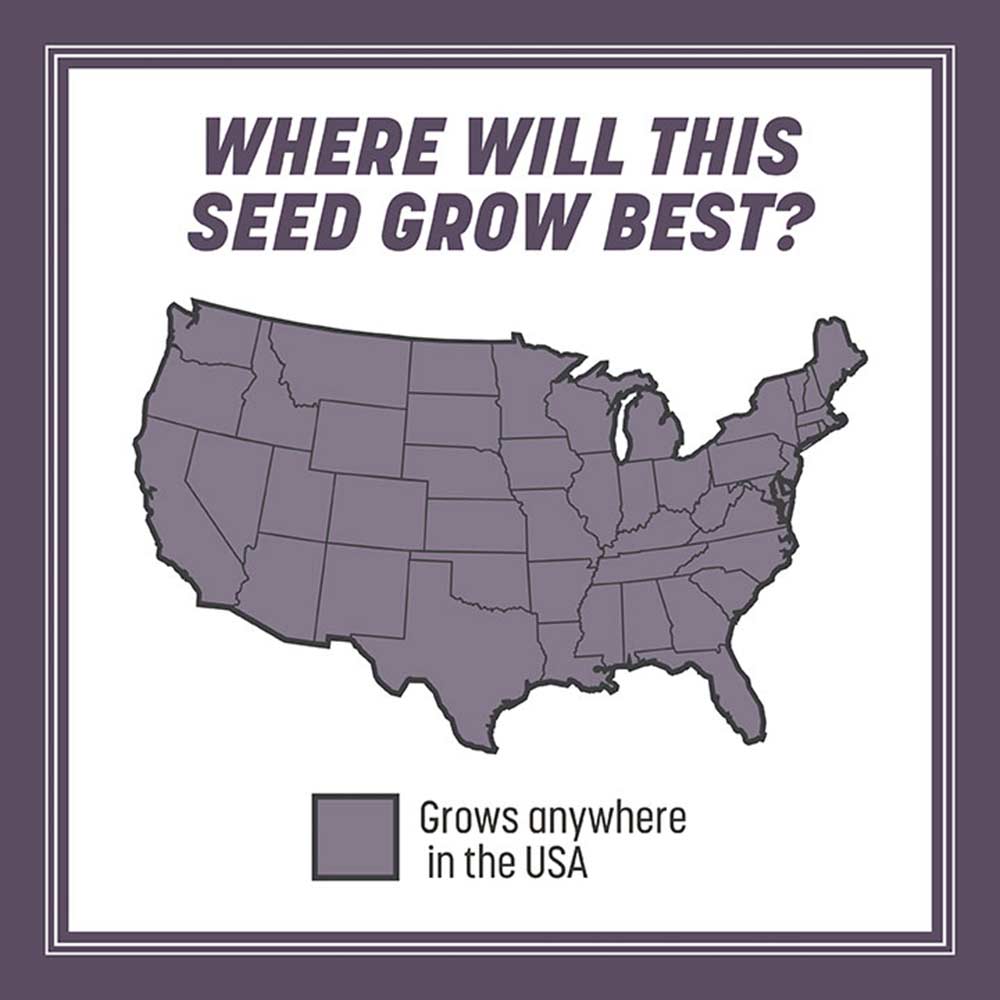
- Grows anywhere in the USA
- Pennington Annual Ryegrass grass seed is guaranteed to grow
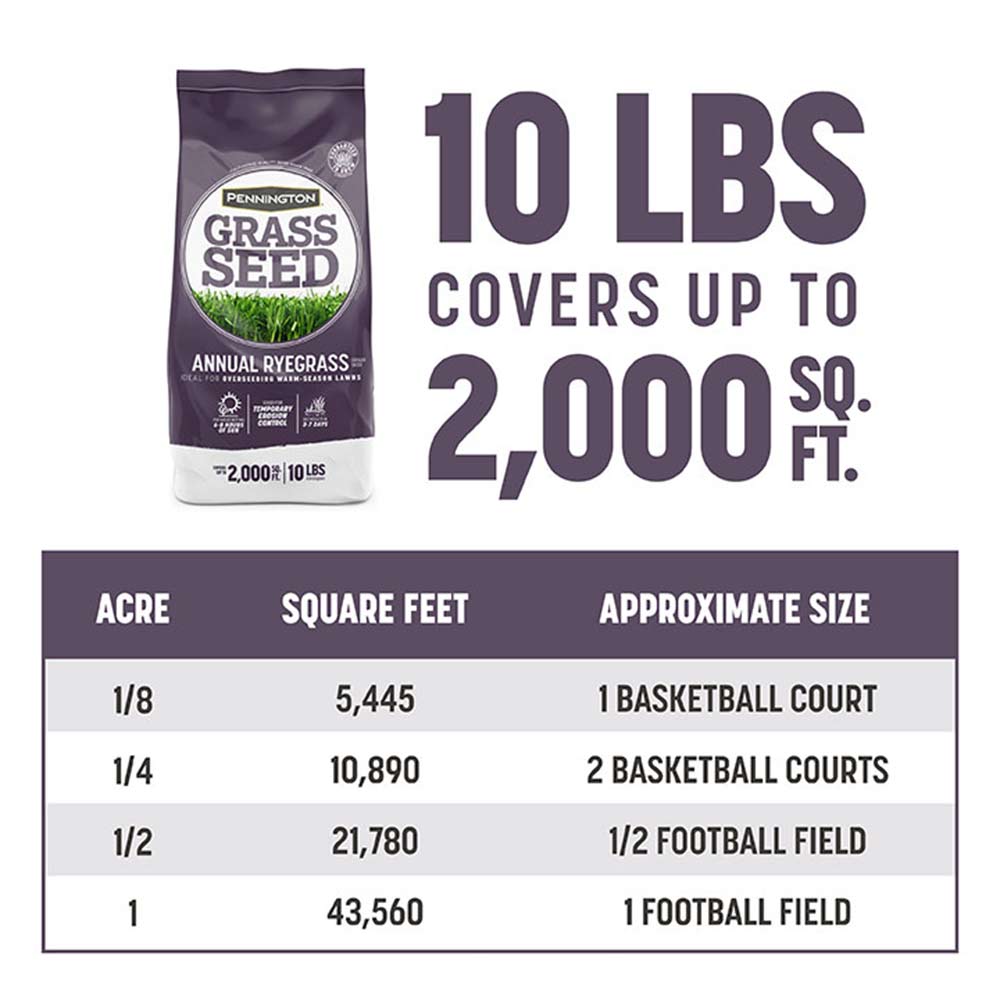
- This bag covers up to 2,000 sq. ft.
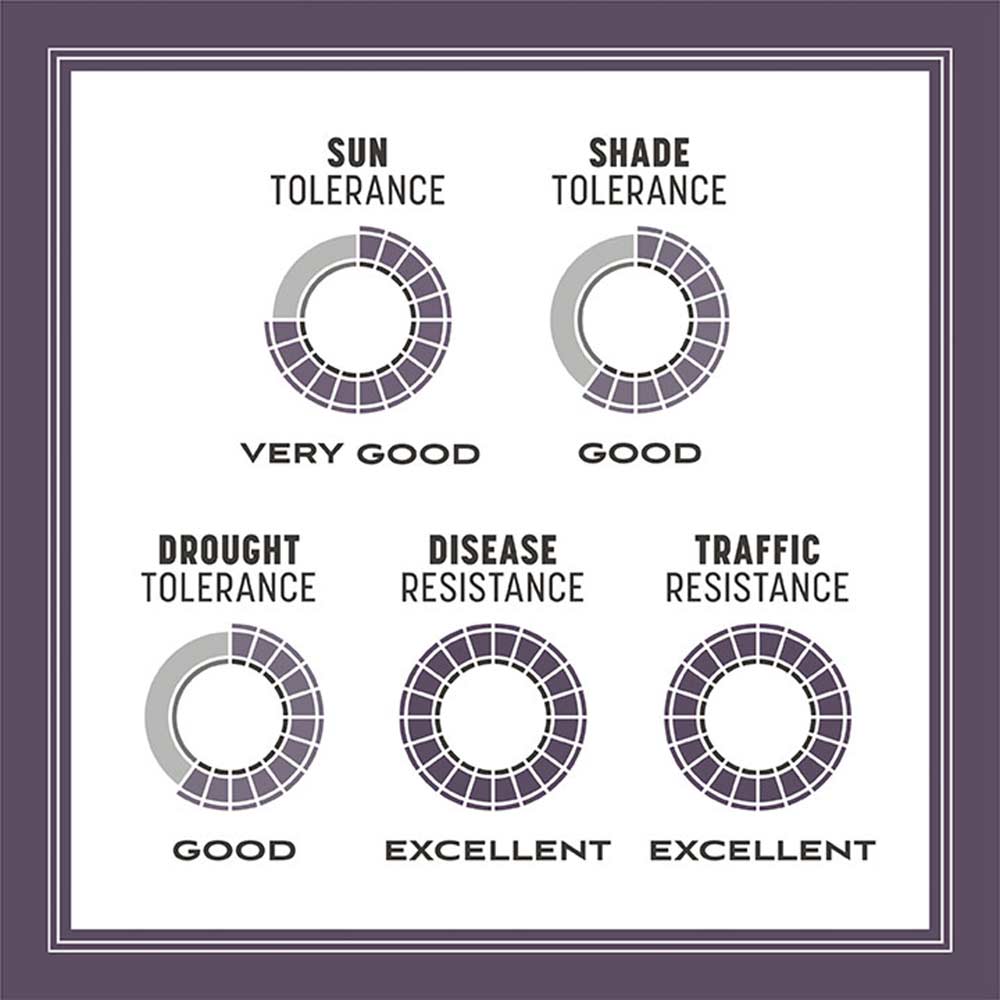
Daily Light Required: 6-8 Hours of Sun
Sun Tolerance: Sun Tolerance
Shade Tolerance: Good
Grass Texture: Fine
Drought Tolerance: Good
Disease Resistance: Excellent
Traffic Tolerance: Excellent
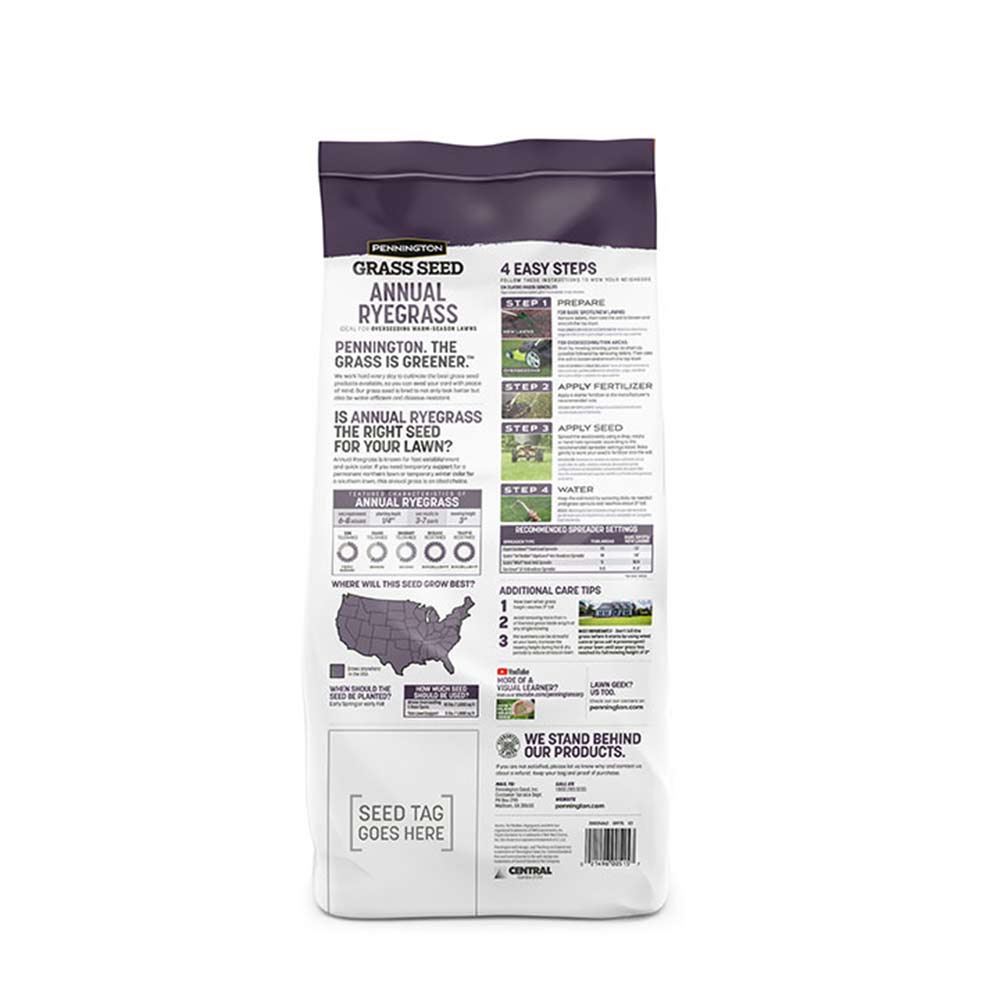
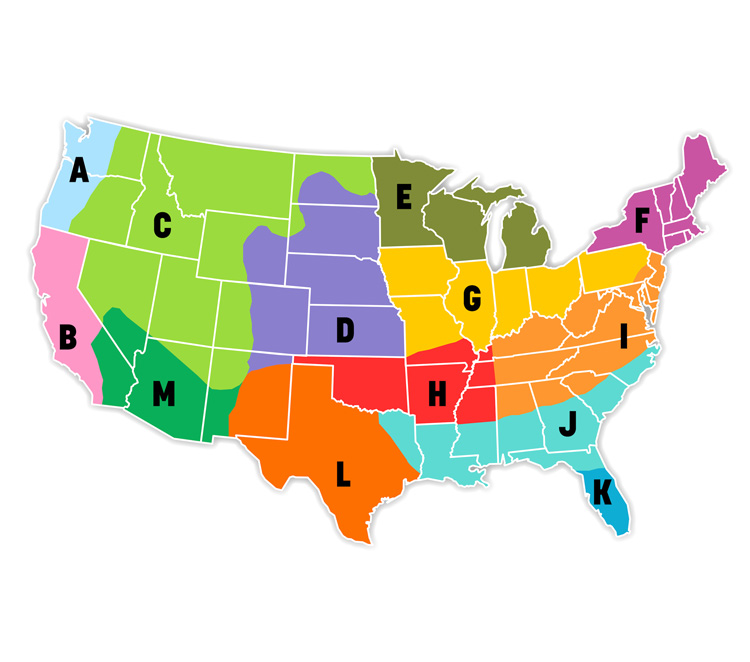
Planting Zones: B, L, M, H, I, J, K
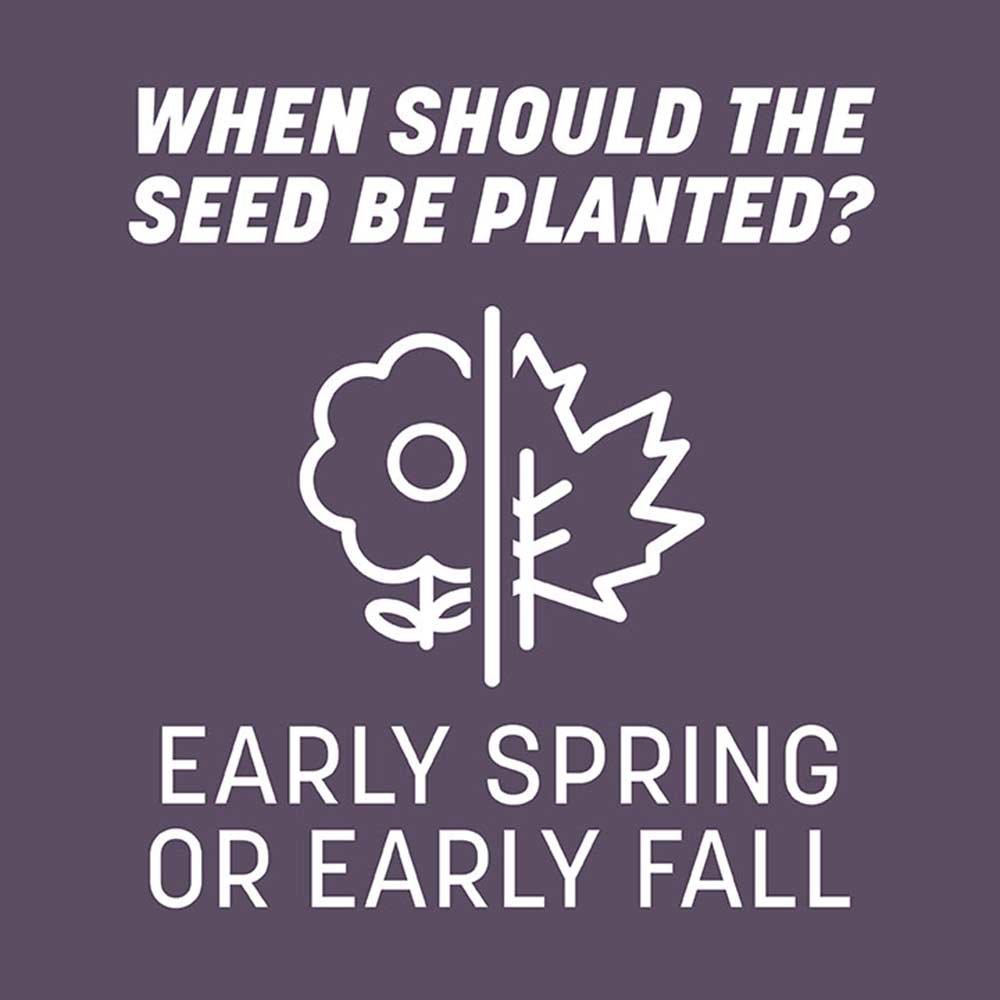
Recommended Planting Dates: Early Spring or Early Fall
Planting Rates:
- New Lawns: 10 lbs/1,000 sq ft
- Overseeding: 5 lbs/1,000 sq ft
Germination: 3 - 7 days
Mowing Height: 3”
For Bare Spots/New Lawns:
Remove debris, then rake the soil to loosen and smooth the top layer.
For Overseeding/Thin Areas:
Start by mowing existing grass as short as possible followed by removing debris. Then rake the soil to loosen and smooth the top layer.
Step 2: Apply Fertilizer
Apply a starter fertilizer at the manufacturer's recommended rate.
Step 3: Apply Seed
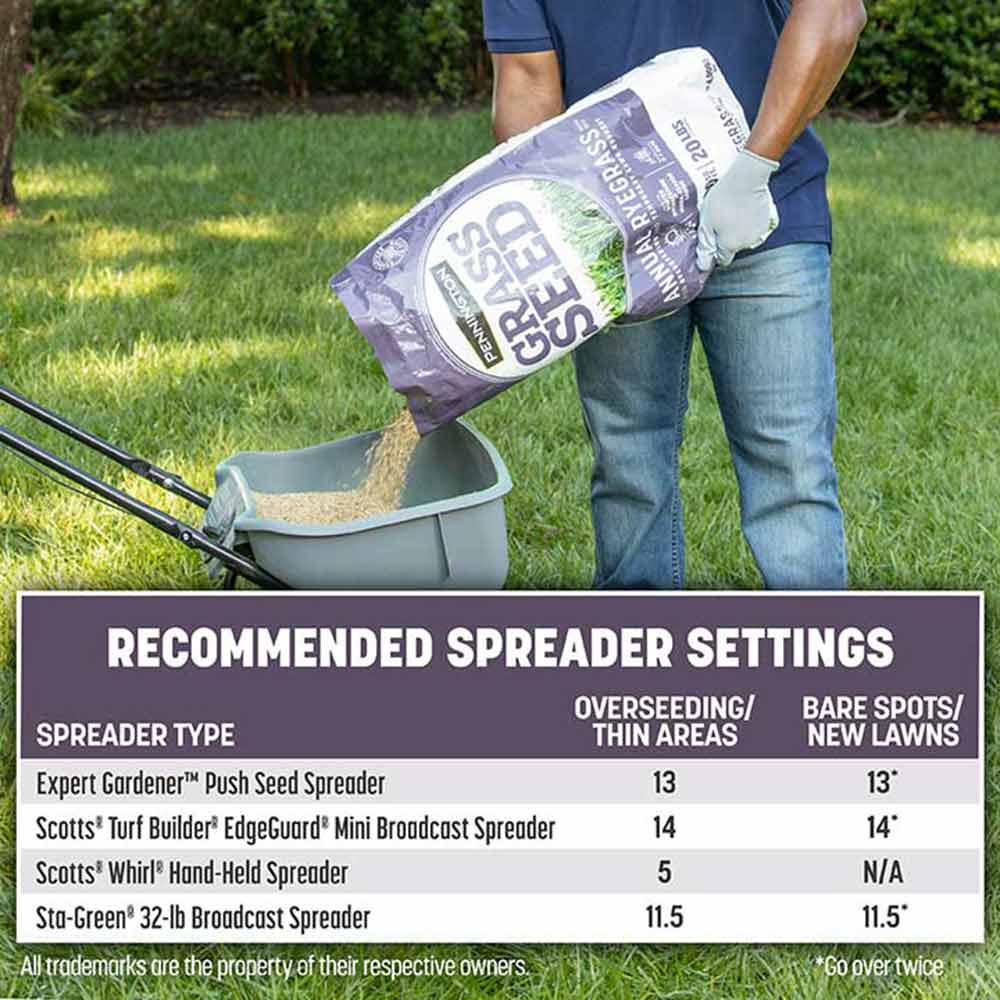
Spread the seed evenly using a drop, rotary or hand-held spreader according to the recommended spreader settings. Rake gently to work your seed & fertilizer in through the soil.
Step 4: Water
Keep the soil moist by watering daily as needed until grass sprouts and reaches about 3" tall.
Frequently Asked Questions
-
What is Pennington Annual Ryegrass grass seed used for?Pennington Annual Ryegrass grass seed is primarily used as a seasonal cover seed suited for erosion control, overseeding, and temporary lawn support. It establishes quickly to provide thick, dense ground cover that can handle wear and tear, making it ideal for areas that need fast, short-term grass coverage while a permanent lawn solution is being established.
-
How much area does a bag of Pennington Annual Ryegrass seed cover?The 7 lb. bag of Pennington Annual Ryegrass grass seed covers up to 1,400 square feet, the 10 lb. bag covers up to 2,000 square feet, the 20 lb. bag covers up to 4,000 square feet, the 25 lb. bag covers up to 5,000 square feet, and the 50 lb. bag covers up to 10,000 square feet. This makes it a practical choice for a variety of lawn sizes, fields, or open areas that need quick, broad coverage for erosion control or temporary lawn support.
-
Will annual ryegrass come back every year on its own?No, annual ryegrass will not come back year after year on its own — it grows and provides temporary benefits for one season only, requiring reseeding every year. Unlike perennial ryegrass, annual ryegrass completes its full life cycle in a single growing season, so homeowners should plan to reseed each year to maintain coverage.
-
Can annual ryegrass be planted in the fall?Yes, annual ryegrass can be planted in the fall. Seeds germinate best when night temperatures are below 75°F, with the optimal fall planting window typically falling in September and October for the best forage and lawn production results.
-
How many days does it take annual ryegrass to germinate?Annual ryegrass is known for its fast germination, typically sprouting within 5 to 10 days under ideal conditions. Germination is most successful when soil temperatures are cool and consistent moisture is maintained — conditions that align well with fall and early spring plantings.
-
What are the disadvantages of annual ryegrass?Annual ryegrass performance decreases during extended periods of very high or very low temperatures, which can limit its effectiveness in extreme climates. Additionally, rust (a fungal disease) can be an issue with annual ryegrass, and because it is not a perennial grass, it requires reseeding each season to maintain ground coverage.
-
What sun conditions does annual ryegrass need to grow well?Pennington Annual Ryegrass requires full sun to light shade for thick, quick lawn cover. It is not well suited to heavily shaded areas, so for best results plant it in spots that receive several hours of direct sunlight each day.
-
Where in the United States can Pennington Annual Ryegrass be grown?Pennington Annual Ryegrass can be grown anywhere in the United States, making it one of the most geographically versatile grass seed options available. Its adaptability across all U.S. climate zones makes it a popular choice for temporary lawn cover, overseeding, and erosion control from coast to coast.
-
What is the difference between annual ryegrass and perennial ryegrass?Annual ryegrass grows for a single season and dies off, requiring reseeding each year, while perennial ryegrass returns year after year without reseeding. Annual ryegrass is typically used for temporary cover, erosion control, and overseeding, whereas perennial ryegrass is better suited for permanent lawn applications.
-
When should I mow annual ryegrass after seeding?You should wait until annual ryegrass reaches a height of about 3 to 4 inches before mowing for the first time after seeding. Mowing too early can stress the young seedlings and reduce establishment success, so allowing the grass to develop a strong root system first will result in healthier, more resilient coverage.
-
Does annual ryegrass spread on its own?Annual ryegrass spreads primarily through seed production rather than by creeping or stolons like some other grass types. Because it is a bunch-type grass, it does not aggressively spread laterally, but it can self-seed under the right conditions — though reliable annual coverage typically requires intentional reseeding.
-
Is Pennington Annual Ryegrass good for erosion control?Yes, Pennington Annual Ryegrass is specifically described as a seasonal cover seed well suited for erosion control. Its fast germination and rapid establishment create dense ground cover that helps stabilize soil on slopes, bare areas, and disturbed ground before permanent vegetation is established.
-
When does annual ryegrass die off?Annual ryegrass dies off after completing its single growing season, typically dying out in late spring to early summer when temperatures rise and heat stress sets in. In warmer climates, this natural die-off happens earlier in the season, which is why annual ryegrass is commonly used as a cool-season temporary cover crop that must be reseeded each year.
-
Can Pennington Annual Ryegrass handle foot traffic and wear?Yes, annual ryegrass is specifically noted to handle wear and tear, making it suitable for lawns and areas subject to foot traffic. Its fast-establishing, dense growth provides a resilient temporary turf surface that holds up well during its active growing season.
-
Is annual ryegrass a good choice for overseeding an existing lawn?Yes, annual ryegrass is a popular and effective choice for overseeding an existing lawn, particularly for adding temporary green color and coverage during cooler months. Pennington Annual Ryegrass establishes quickly, fills in bare or thin spots with thick coverage, and is well suited for overseeding warm-season lawns during their dormant winter period.