.png?h=146&iar=0&w=301&hash=690753E2FA9563314B9D941A755BB22F)

How to Repair Bare Spots in Your Lawn


You can fix most bare spots in your lawn in one afternoon: clear away the dead grass and dirt, loosen the soil underneath, and add a ready-made repair mix. Water it well right away, then keep the spot moist until the new grass is tall enough to mow.
Even a well-kept lawn can get bare spots from cold winters, heavy foot traffic, pet damage, or bad weather, but early spring and early fall are both good times to fix them. A ready-made seed mix saves you time because it already has seed, mulch, and fertilizer mixed together, which helps new grass grow faster and get ready for summer heat or winter cold sooner.
The steps below will help you find the real cause of the damage, then prep the soil, add new seed, water it the right way, and care for it as it grows. This works whether you have one small spot or several thin patches across the yard.
Table of Contents
- What Causes Bare Spots in Your Lawn?
- Find the Real Cause Before You Fix It
- Get Bare Spots Ready for Repair
- Pick and Add Your Seed Mix
- Water New Seed Until It Grows
- Take Care of the Repaired Spot
- Mistakes That Slow Down Your Repair
What Causes Bare Spots in Your Lawn?
Some causes are easy to spot, since road salt, pets, and snow removal tools all leave clear marks, and melting snow and spring rain usually wash away road salt on their own. Other causes take more digging to find:
Compacted soil. Hard, packed soil blocks water, air, and nutrients from reaching grass roots, so loosening it with a tool called an aerator helps before you reseed.
Bad drainage or high spots. Low spots that hold water, and high spots that get scalped by the mower, both make it hard for grass to grow well.
Wrong soil pH or missing nutrients. Soil pH can shift over time even in a lawn you care for well, which changes how easily grass can use the nutrients already in the soil.
Heavy foot traffic. Walking the same path again and again, whether from kids, pets, or a shortcut to the mailbox, packs down the soil and wears out grass faster than it can grow back.
Grubs and other insects. Grubs feed on grass roots under the soil, which can make the turf lift away in patches like loose carpet. [2]
Fungal disease. Overwatering, underwatering and thick layers of dead grass can create conditions for fungal disease. Learn how to identify and manage common lawn diseases.
Drought stress. Long dry spells, or spots your sprinkler misses, can kill grass outright in the driest parts of the yard.
Finding the real cause matters, because it helps stop the same bare spot from coming back next year.
Find the Real Cause Before You Fix It
Take time to find and correct the real cause so your repaired spot has a real chance to grow. Hard, packed soil benefits from aeration before you repair it [1], and drainage problems or high spots are worth fixing now, before new seed goes down.
If you suspect a nutrient problem or the wrong soil pH, test your soil before you buy seed or soil products. Pennington Fast Acting Lime, used according to your soil test results, corrects acidic soil so grass can grow well. If your soil turns out to be too alkaline instead, the test will point you toward the right fix. Sandy soil and clay soil need different amounts of the same product, so always follow the advice made for your specific soil rather than a general rule [3]. Fixing these problems at repair time gives new seed its best possible start.
If grubs are the real culprit, treat them before you reseed — new roots are just as tasty to grubs as old ones. A contact insecticide such as Sevin Insect Killer Lawn GranulesII kills grubs below the surface without harming established turf when used as directed, but always check the label for how long to wait before planting new seed. For more on identifying grub damage and getting the timing right, check out this guide to fall lawn and garden pest control.

Clearing away dead grass lets new seed touch real soil, which it needs to grow roots.
Get Bare Spots Ready for Repair
Mow the damaged spot and the surrounding area at your normal height, then pull out any dead or damaged grass to expose clean soil underneath. If a thick layer of dead grass is part of the problem, learn when and how to dethatch your lawn before reseeding, which can help ensure seed accurately bonds with the soil for germination.
If the spot needs leveling, add or remove some topsoil, rake it well, and smooth it out so it sits even with the rest of your lawn. Loose, smooth soil helps new seedlings grow strong, deep roots.
Hold off on weed killer or “weed and feed” products for now, since these stop seeds from growing unless you wait five to six weeks before you plant. Adding them too soon can undo your repair before it even starts.
Pick and Add Your Seed Mix
Pick a seed mix that fits your climate, your grass type, and how much sun the spot gets. Pennington Smart Patch II mixes already combine good grass seed, water-holding mulch, and fertilizer, which protect new seed and feed young grass until it's ready for normal care.
Spread the mix evenly over the soil, following the directions on the label, so seedlings get the right amount of sun and good contact with the soil. You don't need to worry about how deep to plant the seed; just cover the bare soil well and water it right away.

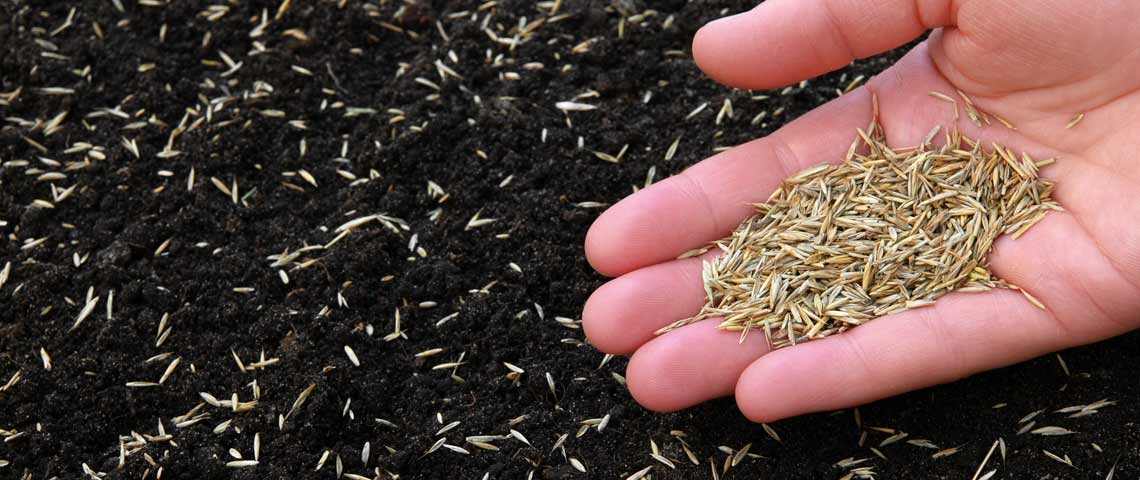
Spreading seed evenly over the whole bare spot means every part of it gets covered and watered the same way.
Water New Seed Until It Grows
Watering the right way is the most important step, and it's also the one people skip most often. Water-holding mulch means you water less often and helps hold seed in place even on a hill, but you should still plan to water at least once a day. Let the weather be your guide: keep the spot always moist but never soggy, and water a bit more during hot, dry stretches.
Keep watering until the new grass reaches the right height for mowing. A shade seed mix should grow 2 1/2 to 3 inches tall, while tall fescue should reach 3 to 4 inches, before you cut back to watering once or twice a week. New grass can sprout in as few as five days, with full results in about 14 days, and most seed mixes reach mowing height in three to four more weeks.

Watering a little every day, not soaking it once in a while, keeps new seed damp enough to sprout.
Take Care of the Repaired Spot
Keep people and pets off the new spot until the grass is well established, since foot traffic on young seedlings can undo weeks of careful watering in a single afternoon.
Wait until the new grass grows one-third taller than your normal mowing height before you mow it for the first time, and never cut off more than one-third of the grass blade at once as the weather warms up. Wait to add weed killer to the spot until you've mowed it three or four times, since new grass seedlings are sensitive to weed killer and product labels should always be checked first.

Waiting to mow until new grass is taller protects it while its roots are still getting established.
Mistakes That Slow Down Your Repair
A few common mistakes can slow down even a well-timed repair:
- Skipping soil prep. Seed thrown onto hard or thatchy soil often blows or washes away before it ever gets the chance to grow.
- Adding weed killer too soon. A weed control product used too close to seeding can stop new grass from growing, just as effectively as it stops weeds.
- Watering by the clock instead of by feel. A fixed watering schedule can leave seed too dry during a heat wave or too wet during a rainy week, so check the actual soil instead of just the clock.
- Mowing too soon or too short. Cutting new grass before it's tall enough, or cutting off too much at once, puts stress on seedlings right when they're most vulnerable.
- Ignoring the real cause. Skipping a fix for drainage, grubs, or soil pH often means the same spot goes bare again next year.
Bare spots are rarely a sign of a lawn in real trouble. Most trace back to one identifiable cause — compacted soil, a grub problem, the wrong pH, too much foot traffic — that, once addressed, doesn't have to repeat itself. The repair work itself is straightforward: clear, loosen, seed, and water consistently. What usually separates a spot that heals for good from one that reopens next season is whether the underlying cause got fixed, not which product went down. Give new grass the time it needs, and a patchy lawn is a temporary problem, not a permanent one.
Pennington is a registered trademark of Pennington Seed, Inc.
Sources
- Shober, A.L., Denny, G.C., Reisinger, A.J., & Bean, E.Z. “Soil Compaction in the Urban Landscape” (SL 317/SS529). University of Florida IFAS Extension. Updated July 16, 2025. https://ask.ifas.ufl.edu/publication/SS529
- Richmond, D.S. “Managing White Grubs in Turfgrass” (E-271-W). Purdue University Cooperative Extension Service. Published June 2023. https://extension.entm.purdue.edu/publications/E-271/E-271.html
- Penn State Extension. “Soil Testing.” Updated June 29, 2026. https://extension.psu.edu/soil-testing
-
Frequently Asked Questions
What is the fastest way to fix bare spots in a lawn?Clear away the dead grass and dirt, loosen the soil, and add a ready-made repair mix that already contains seed, mulch, and fertilizer. Water it well right away, then keep the area moist until the new grass reaches mowing height. -
What causes bare spots in a lawn?Bare spots often come from packed or poorly drained soil, the wrong soil pH, low nutrients, heavy foot traffic, grubs or insects, fungal disease, dry weather, pet urine, or road salt and snow removal tools. Finding the real cause first helps stop the same spot from coming back.
-
How long does it take grass to fill in bare spots?New grass can sprout in as few as five days, with full results in about 14 days depending on the seed mix used. Most spots reach normal mowing height in three to four more weeks, so the whole job usually takes two to seven weeks from start to finish.
-
When is the best time to fix bare spots in a lawn?Cool-season grass, like tall fescue and Kentucky bluegrass, grows best when planted in early fall or early spring, while warm-season grass grows best in late spring through early summer, once the soil has warmed. Planting at the wrong time won't ruin the seed, but it will slow it down and leave new grass more exposed to summer heat or winter cold.
-
Will bare spots go away on their own?Some grasses spread on their own using underground or above-ground runners, so certain Kentucky bluegrass and Bermuda grass types may fill in small bare spots by themselves over time. Clumping grasses like tall fescue and perennial ryegrass don't spread this way and will stay bare until you plant new seed directly.
-
How do I fix a bare spot caused by grubs?Confirm grubs are really the cause first. Pull back a patch of loose or dead turf and look for white, C-shaped grubs in the soil. If you find them, treat the spot with a contact bug killer such as Sevin Insect Killer Lawn GranulesII before you reseed. New grass roots taste just as good to grubs as old ones, so planting over an active infestation only feeds it again. Once the grubs are gone, repair the spot the same way as any other bare spot: clear away dead grass, loosen the soil, add seed, and water it until it reaches mowing height.